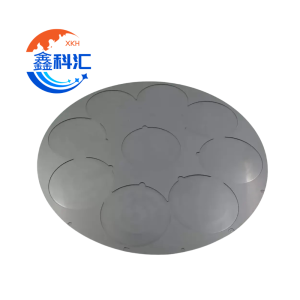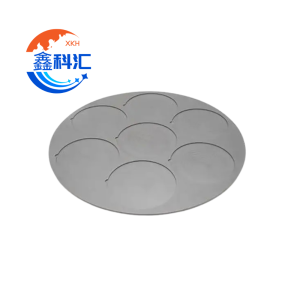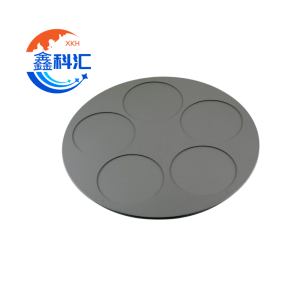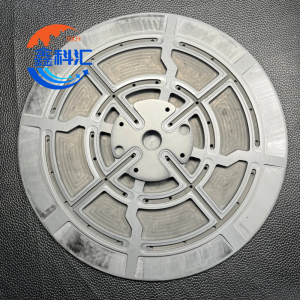
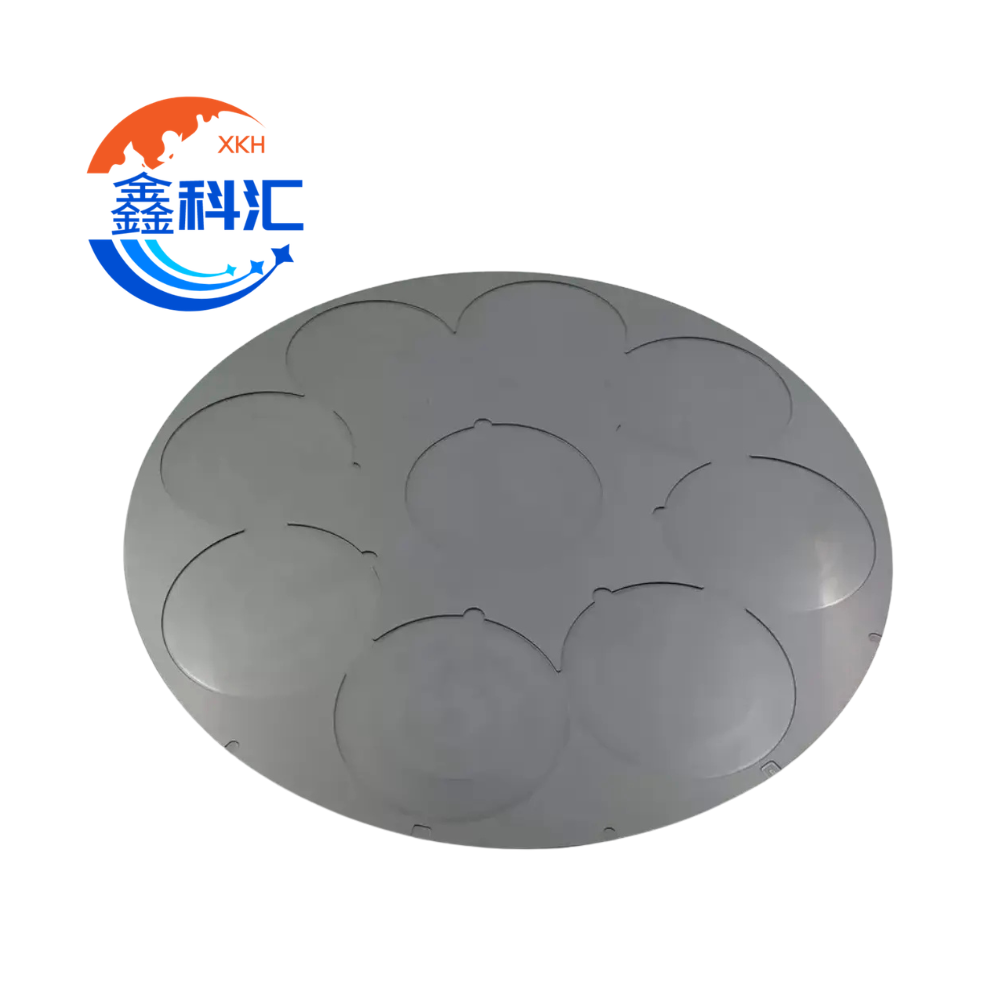
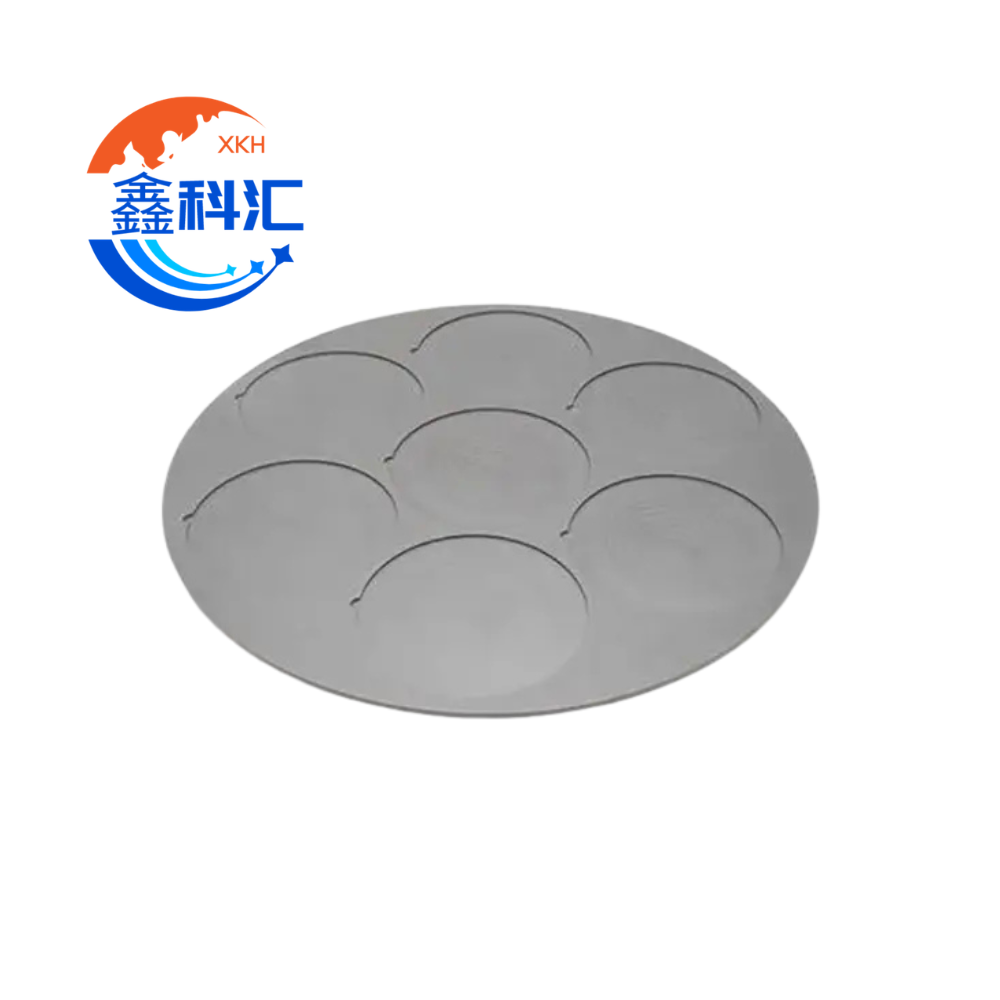
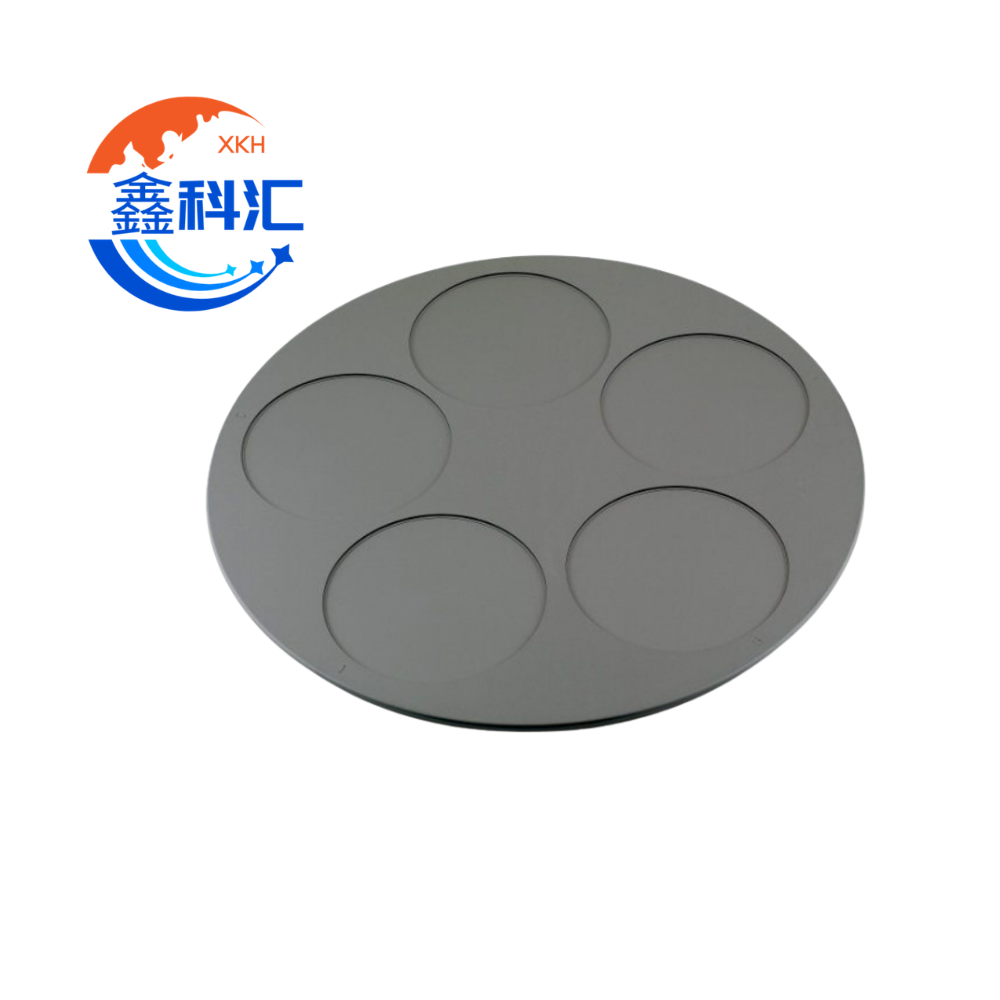
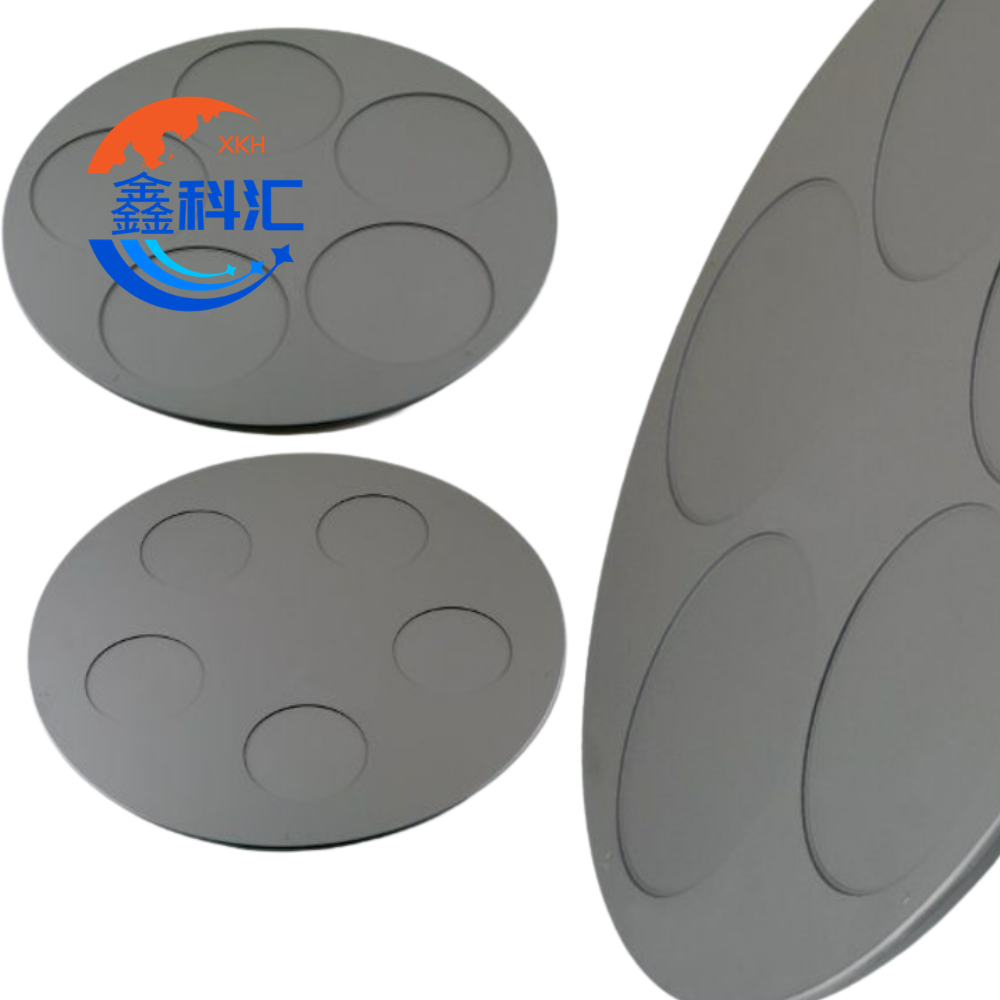
The SiC ceramic tray plate is a high-performance wafer carrier designed for advanced semiconductor processes such as MOCVD, epitaxy, and ICP etching. It is available in two structures:
- Graphite substrate with CVD SiC coating
- Monolithic high-purity CVD SiC tray (≥99.99%)
Compared with conventional graphite carriers, this product offers significantly improved thermal stability, corrosion resistance, and service life, making it ideal for demanding high-temperature semiconductor manufacturing environments.
It is widely used in GaN LED production, power semiconductor fabrication, and precision wafer processing systems.
Key Features & Advantages
1. Ultra-High Temperature Resistance
- Stable operation at 1100–1200°C+
- Suitable for harsh MOCVD and epitaxial growth environments
- No deformation under long-term thermal cycling
2. Superior CVD SiC Coating Protection
- Purity up to 99.999% SiC
- Dense coating prevents gas penetration and substrate erosion
- Eliminates graphite particle contamination in wafer processing
3. Excellent Corrosion & Chemical Resistance
- Resistant to HF, H₂SO₄, HCl and reactive process gases
- Ideal for aggressive semiconductor etching environments
4. High Thermal Conductivity & Uniform Heating
- Ensures uniform temperature distribution across wafer surface
- Improves film quality and process stability
5. Long Service Life
- Up to 4× longer lifespan than traditional graphite-based trays
- Reduced downtime and lower replacement frequency
![]()
Technical Specifications
| Parameter | Value |
|---|---|
| Material Type | Graphite + CVD SiC coating / Full CVD SiC |
| SiC Purity | ≥99.9% (coated), ≥99.99% (monolithic) |
| Diameter Range | Φ380 mm – Φ600 mm |
| Operating Temperature | 1100–1200°C |
| Thermal Conductivity | High |
| Corrosion Resistance | Excellent (HF, H₂SO₄ resistant) |
| Service Life | ~4× graphite-based trays |
Application Areas
Semiconductor Manufacturing
- MOCVD (Metal Organic Chemical Vapor Deposition)
- Epitaxial wafer growth (GaN, SiC, etc.)
- ICP etching processes
- High-precision wafer handling systems
LED Industry
- High-brightness blue & white LED production
- GaN-based optoelectronic devices
Advanced Electronics
- Power semiconductors
- High-frequency devices
- Precision thin-film deposition systems
Performance Advantages vs Traditional Graphite Trays
| Item | Graphite Tray | CVD SiC Coated Tray |
|---|---|---|
| Temperature Resistance | Medium | Very High |
| Corrosion Resistance | Poor | Excellent |
| Particle Contamination | High risk | Minimal |
| Service Life | Short | 3–4× longer |
| Surface Stability | Degrades over time | Highly stable |
Packaging & Handling
- Cleanroom-grade packaging available
- Shock-resistant wooden crate or vacuum sealing
- Designed for contamination-free semiconductor transport
- Custom sizes supported (Φ380–Φ600 mm or tailored designs)
Why Choose This Product
This SiC wafer carrier tray is engineered for next-generation semiconductor manufacturing, where purity, thermal stability, and contamination control are critical. By replacing traditional graphite-based carriers, it significantly improves production yield, reduces maintenance costs, and ensures stable long-term process performance.
FAQ
Q1: What is the main advantage of CVD SiC coating compared to graphite trays?
CVD SiC coating provides a dense, ultra-pure protective layer that prevents gas penetration and graphite particle shedding, greatly improving durability and reducing wafer contamination.
Q2: Can this SiC tray be used in MOCVD high-temperature processes?
Yes. It is specifically designed for MOCVD applications and can operate reliably at 1100–1200°C with excellent thermal stability and uniform heat distribution.
Q3: What is the difference between coated graphite trays and full CVD SiC trays?
Coated graphite trays use a graphite core with a protective SiC layer, while full CVD SiC trays are monolithic structures with higher purity, better corrosion resistance, and longer service life.


レビュー
レビューはまだありません。