業界ニュース

セラミックヒートシンクとセラミックヒートスプレッダ:主な違いと技術的役割

In high-power electronics, semiconductor packaging, LED systems, and RF devices, thermal management is one of the most critical factors affecting performance and reliability. As power density continues to increase, two terms are frequently used: Ceramic Heatsink and Ceramic Heat Spreader. Although they sound similar, they serve very different roles in a thermal system. In simple terms, one is designed to spread heat, while the other is designed to remove heat from the system. 1. What is a Ceramic Heat Spreader? A ceramic heat spreader is not a final cooling device. Instead, it is an internal thermal management layer designed to redistribute concentrated heat. In electronic devices, heat is typically generated […]

セラミックヒートシンクとセラミックヒートスプレッダ:主な違いと技術的役割 続きを読む »
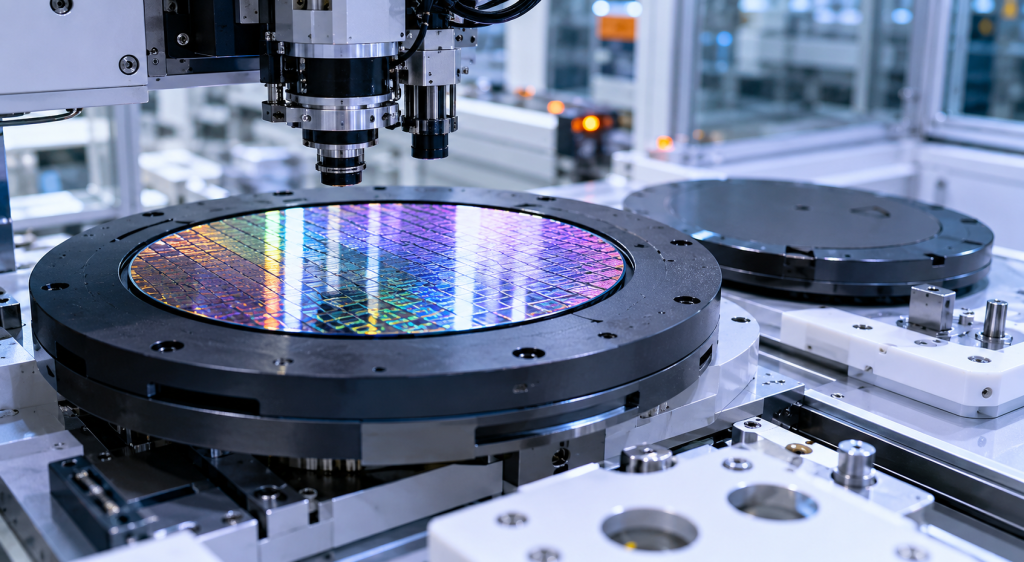
リソグラフィーからウェハー製造まで:炭化ケイ素セラミックスはいかにして10億ドル規模の半導体市場を動かしているのか?

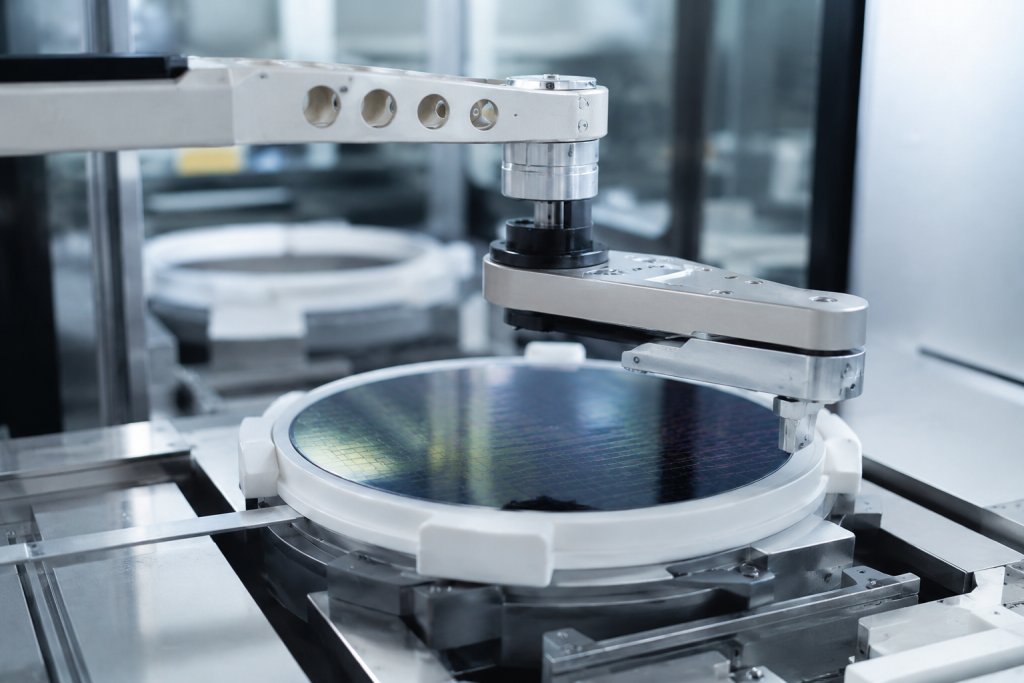
When people think about the semiconductor industry, they usually focus on chips, wafers, or advanced process nodes. However, behind every semiconductor breakthrough lies a less visible but equally critical foundation: advanced materials. As semiconductor manufacturing continues to pursue higher precision, smaller geometries, and faster production speeds, equipment performance requirements are becoming increasingly demanding. This shift is creating new opportunities for advanced engineering materials—especially Silicon Carbide (SiC) ceramics. From lithography machines to wafer processing systems, silicon carbide ceramics are rapidly becoming key components in modern semiconductor equipment. Once considered a niche material, SiC ceramics are now helping build what many industry experts see as a future multi-billion-dollar market. The Hidden Material

リソグラフィーからウェハー製造まで:炭化ケイ素セラミックスはいかにして10億ドル規模の半導体市場を動かしているのか? 続きを読む »

炭化ケイ素ウェハー・ボートと石英ウェハー・ボート:どちらが優れているか?

In semiconductor manufacturing, wafer handling components directly affect process stability, yield, and long-term operating cost. Among them, wafer boats play a critical role in transporting and supporting wafers during high-temperature diffusion, oxidation, epitaxy, and coating processes. Two of the most commonly used materials are Silicon Carbide (SiC) wafer boats and Quartz wafer boats. While both are widely used in semiconductor and precision manufacturing environments, they differ significantly in thermal performance, durability, contamination control, and lifecycle cost. So which one is better? The answer depends on your process requirements. This article compares SiC and quartz wafer boats across key performance factors to help manufacturers make a better choice. What Is a

炭化ケイ素ウェハー・ボートと石英ウェハー・ボート:どちらが優れているか? 続きを読む »

半導体装置用複雑構造セラミック部品の製造上の課題

In advanced semiconductor manufacturing, key process modules such as plasma etching, chemical vapor deposition (CVD), and ion implantation operate under extreme environments involving high-energy plasma, corrosive gases, high voltage bias, and rapid thermal cycling. These conditions impose stringent requirements on structural materials in terms of dielectric stability, corrosion resistance, thermal compatibility, and long-term dimensional reliability. Advanced engineering ceramics—such as alumina (Al₂O₃), aluminum nitride (AlN), silicon carbide (SiC), and silicon nitride (Si₃N₄)—have become indispensable due to their excellent combination of thermal, electrical, and chemical stability. However, the ongoing evolution of semiconductor equipment toward miniaturization and functional integration has driven ceramic components from simple geometries to highly complex architectures, including micro-channel networks,

半導体装置用複雑構造セラミック部品の製造上の課題 続きを読む »

機能性セラミックスの説明:先端工学材料の科学的概観

1. Introduction Functional ceramics are a class of inorganic, non-metallic materials designed not only for structural integrity but also for specific physical, chemical, electrical, optical, or thermal functions. Unlike traditional ceramics used mainly for bricks, tiles, or sanitary ware, functional ceramics are engineered at the microstructural level to deliver targeted performance in advanced technologies. They play a critical role in modern industries such as electronics, aerospace, energy systems, optics, and semiconductor manufacturing, where conventional metals or polymers cannot meet extreme operating conditions. 2. Definition and Classification Functional ceramics can be broadly defined as ceramic materials whose primary value lies in their functional properties rather than mechanical strength alone. They are

機能性セラミックスの説明:先端工学材料の科学的概観 続きを読む »

半導体装置における先進セラミック材料:アプリケーションと材料比較

In modern semiconductor manufacturing equipment, advanced ceramics are no longer optional components—they are critical enabling materials that determine precision, stability, and process reliability. From plasma etching chambers to wafer handling systems, different ceramic materials are selected based on thermal, electrical, and mechanical performance requirements. This article introduces the most widely used semiconductor-grade ceramics and provides a clear technical comparison for engineering and procurement decision-making. 1. Why Ceramics Are Essential in Semiconductor Equipment Semiconductor production environments involve: Traditional metals fail in insulation, corrosion resistance, or thermal stability. Advanced ceramics solve these limitations. 2. Most Widely Used Ceramic Materials 2.1 Alumina (Al₂O₃) – The Industry Standard Material Alumina ceramic is the most

半導体装置における先進セラミック材料:アプリケーションと材料比較 続きを読む »

高性能熱管理:アルミナセラミックヒートシンクが従来の金属ソリューションに取って代わる理由

As electronic devices continue to evolve toward higher power density, efficient heat dissipation has become one of the most critical challenges in modern engineering. Traditional metal heat sinks such as aluminum and copper are no longer sufficient in applications requiring both electrical insulation and thermal stability. This is where the alumina ceramic heat sink (Al₂O₃) plays a key role. Combining excellent thermal performance with outstanding insulation properties, alumina ceramic materials are increasingly used in power electronics, LED systems, and high-voltage environments. What Is an Alumina Ceramic Heat Sink? An alumina ceramic heat sink is a thermal management component made from high-purity aluminum oxide (Al₂O₃). Unlike metal-based heat sinks, alumina ceramics

高性能熱管理:アルミナセラミックヒートシンクが従来の金属ソリューションに取って代わる理由 続きを読む »

産業用セラミックス vs 炭化ケイ素 vs サファイア:構造・機能材料の観点から

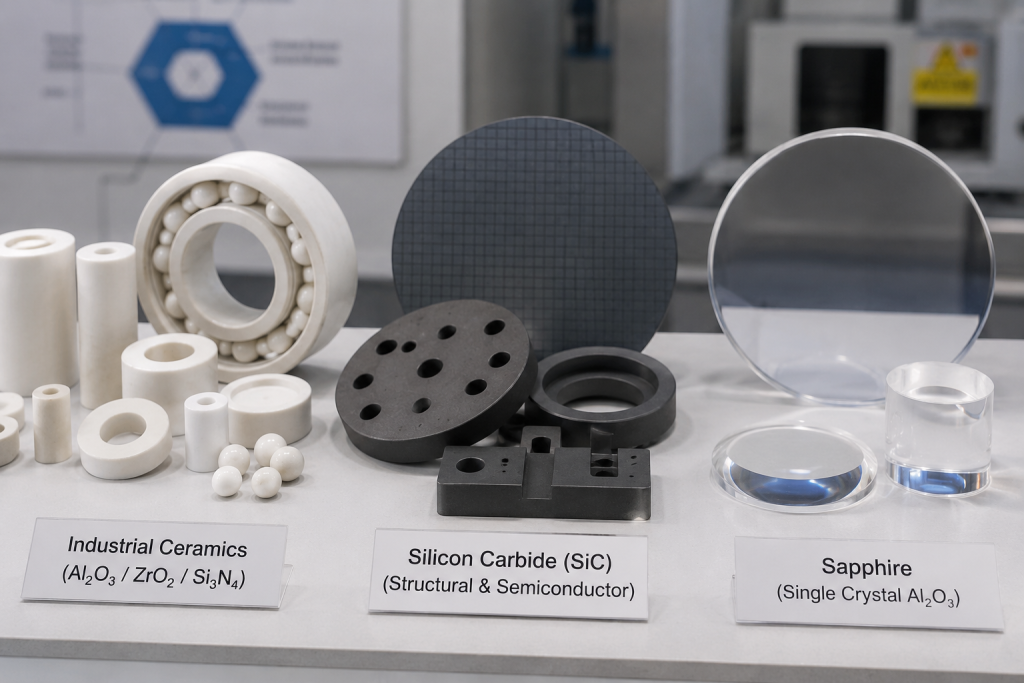
In advanced engineering industries such as semiconductors, precision machinery, and optical systems, industrial ceramics, silicon carbide (SiC), and sapphire are often compared as competing materials. However, this comparison is misleading if treated as a simple “which is better” question. A more accurate understanding is: These three materials represent three different material architectures, not just three performance levels. They belong to different “material design philosophies,” not just different material families. 1. Industrial Ceramics: The Engineering Foundation Layer Industrial ceramics refer to a broad class of polycrystalline materials, including: Core Concept: Designed Trade-Off Materials Industrial ceramics are not defined by extreme performance, but by: balanced engineering optimization between cost, machinability, and durability

産業用セラミックス vs 炭化ケイ素 vs サファイア:構造・機能材料の観点から 続きを読む »

ベアリング用精密セラミックボール:材料選択と性能

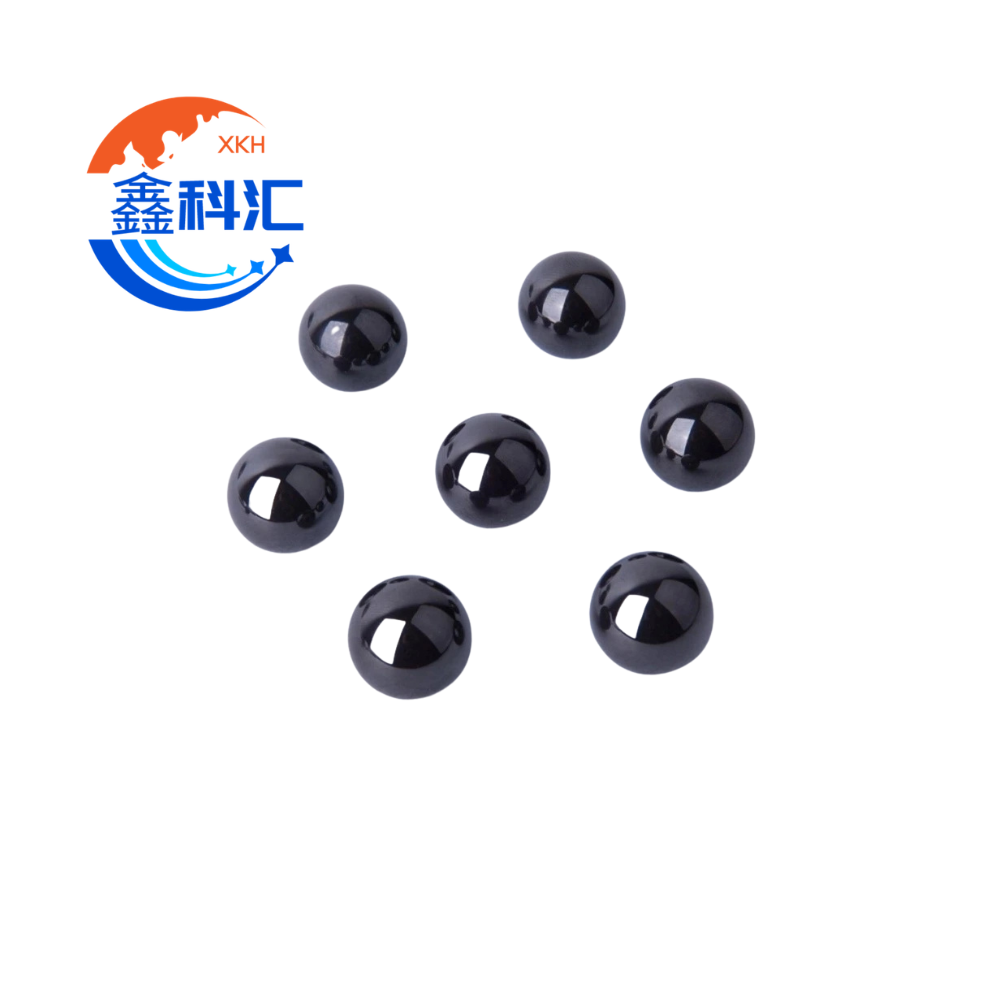
Precision ceramic balls are widely used in modern high-performance bearings where speed, reliability, and service life are critical. Compared with traditional steel balls, ceramic materials offer distinct advantages in friction reduction, wear resistance, and high-speed operation, making them essential components in aerospace, electric vehicles, precision machinery, and advanced manufacturing equipment. This article explains the main ceramic materials used in bearing balls, their performance characteristics, and key engineering considerations for selection. 1. What Are Precision Ceramic Bearing Balls? Precision ceramic bearing balls are spherical rolling elements manufactured from advanced technical ceramics. They replace or complement steel balls inside bearings to improve mechanical and thermal performance. Common materials include: These materials are

ベアリング用精密セラミックボール:材料選択と性能 続きを読む »

ジルコニア・セラミック部品が装置の寿命を向上させる理由

Modern industrial equipment operates under increasingly demanding conditions. Higher speeds, elevated temperatures, abrasive environments, and continuous operation place tremendous stress on machine components. As industries pursue greater efficiency and lower maintenance costs, material selection has become a critical factor affecting system reliability and service life. Among advanced engineering ceramics, zirconia ceramic (ZrO₂) has gained significant attention due to its outstanding mechanical strength, wear resistance, and durability. Compared with conventional metals and many traditional ceramics, zirconia components can substantially improve equipment longevity and reduce operational downtime. This article explores how zirconia ceramic parts enhance equipment life, key material advantages, industrial applications, and important selection considerations. Why Equipment Components Fail Most industrial

ジルコニア・セラミック部品が装置の寿命を向上させる理由 続きを読む »

ジルコニアとアルミナ:どちらのセラミック材料がより良い性能を発揮するか?

Advanced ceramics have become essential materials in industries requiring exceptional wear resistance, high strength, thermal stability, and chemical durability. Among the most widely used engineering ceramics, zirconia (ZrO₂) and alumina (Al₂O₃) stand out due to their broad industrial applications and excellent performance characteristics. However, engineers and purchasing teams often face a key question: Which ceramic material performs better—zirconia or alumina? The answer depends on operating conditions, mechanical requirements, cost targets, and application environments. This article provides a detailed comparison of zirconia and alumina across material properties, performance, applications, and selection guidelines. Understanding Zirconia and Alumina Ceramics What Is Zirconia Ceramic? Zirconia, or zirconium dioxide (ZrO₂), is an advanced ceramic known

ジルコニアとアルミナ:どちらのセラミック材料がより良い性能を発揮するか? 続きを読む »

半導体製造用構造セラミックス:材料、アプリケーション、将来の動向

Modern semiconductor manufacturing requires unprecedented levels of precision, cleanliness, thermal stability, and reliability. As chip architectures continue to evolve toward smaller nodes, higher power density, and advanced packaging technologies, conventional metallic materials increasingly face limitations in process environments involving plasma exposure, ultra-high vacuum, aggressive chemicals, and extreme temperatures. Structural ceramics have therefore become indispensable materials in semiconductor equipment. Their unique combination of mechanical strength, wear resistance, thermal stability, corrosion resistance, and electrical properties makes them essential for wafer processing, handling, deposition, etching, and inspection systems. This article provides an in-depth analysis of structural ceramics used in semiconductor manufacturing, including material types, critical properties, equipment applications, selection criteria, and future industry

半導体製造用構造セラミックス:材料、アプリケーション、将来の動向 続きを読む »