In semiconductor manufacturing, wafer handling components directly affect process stability, yield, and long-term operating cost. Among them, wafer boats play a critical role in transporting and supporting wafers during high-temperature diffusion, oxidation, epitaxy, and coating processes.
Two of the most commonly used materials are Silicon Carbide (SiC) wafer boats and Quartz wafer boats. While both are widely used in semiconductor and precision manufacturing environments, they differ significantly in thermal performance, durability, contamination control, and lifecycle cost.
So which one is better? The answer depends on your process requirements.
This article compares SiC and quartz wafer boats across key performance factors to help manufacturers make a better choice.
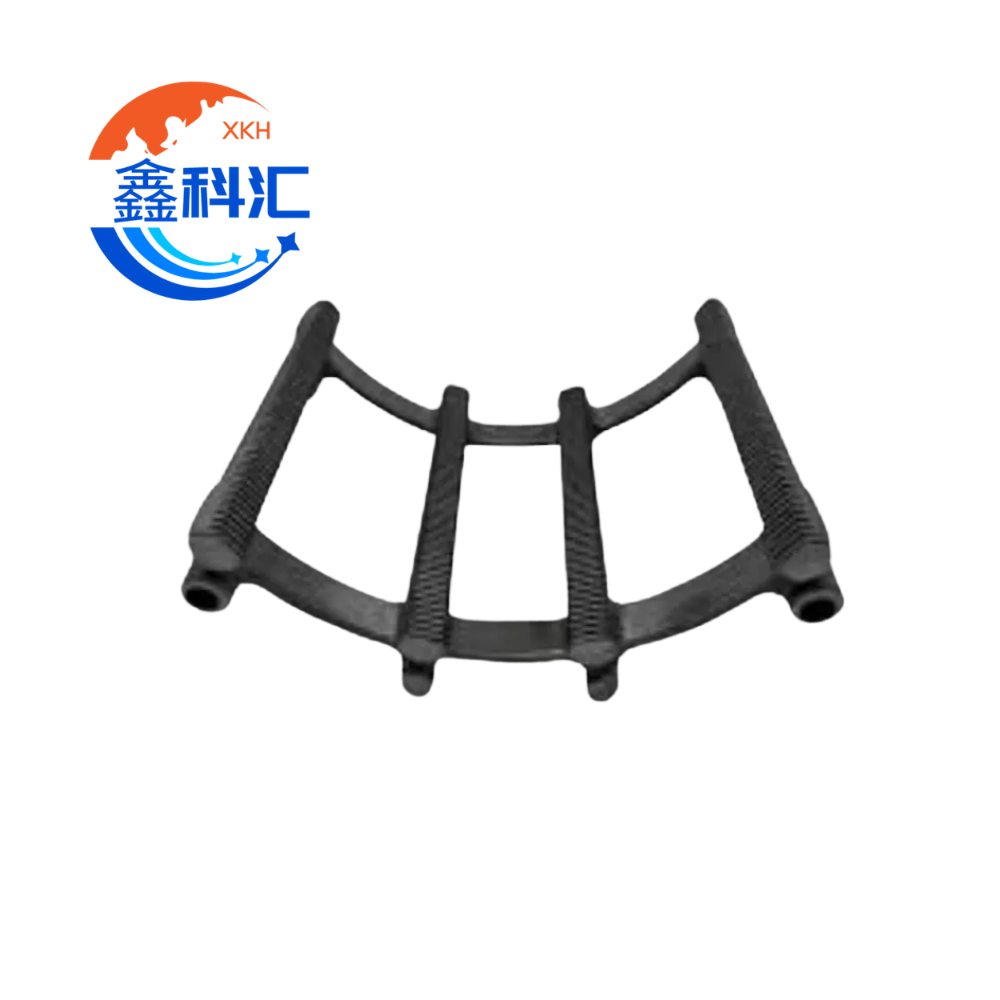
What Is a Wafer Boat?
A wafer boat is a carrier structure designed to securely hold semiconductor wafers during high-temperature processing. It maintains wafer spacing, positioning accuracy, and mechanical stability while exposed to demanding environments.
Wafer boats are commonly used in:
- Diffusion furnaces
- Oxidation systems
- LPCVD processes
- Epitaxy equipment
- Semiconductor coating systems
- Solar cell manufacturing
Because wafer boats repeatedly operate under thermal cycling and chemical exposure, material selection becomes extremely important.
Silicon Carbide Wafer Boat Overview
Silicon carbide wafer boats are manufactured from advanced ceramic materials with exceptional thermal and mechanical properties.
Key characteristics:
- Excellent high-temperature resistance
- High thermal conductivity
- Outstanding mechanical strength
- Superior corrosion resistance
- Low deformation under thermal cycling
- Long service life
SiC wafer boats are increasingly used in advanced semiconductor processing and high-volume production environments.
Quartz Wafer Boat Overview
Quartz wafer boats are made from high-purity fused quartz and have traditionally been used in semiconductor furnaces.
Key characteristics:
- High purity
- Low metallic contamination
- Good transparency to heat radiation
- Relatively low material cost
- Mature manufacturing process
Quartz has been a standard material for many conventional semiconductor applications for decades.
Silicon Carbide Wafer Boat vs Quartz Wafer Boat: Performance Comparison
| Parameter | Silicon Carbide Wafer Boat | Quartz Wafer Boat |
|---|---|---|
| Maximum operating temperature | Very high | High |
| Thermal conductivity | Excellent | Low |
| Mechanical strength | Very high | Relatively low |
| Thermal shock resistance | Excellent | Moderate |
| Resistance to deformation | Excellent | Lower |
| Corrosion resistance | Excellent | Good |
| Service life | Long | Shorter |
| Initial cost | Higher | Lower |
| Long-term cost | Lower | Potentially higher |
1. Thermal Conductivity and Heat Distribution
One of the biggest differences between SiC and quartz is thermal conductivity.
Silicon carbide transfers heat much more efficiently than quartz. Better thermal conductivity helps create more uniform temperature distribution across wafers during processing.
Benefits include:
- More stable process conditions
- Improved wafer consistency
- Reduced thermal gradients
- Lower risk of warpage
Quartz has relatively low thermal conductivity. During rapid heating and cooling cycles, temperature differences may become more pronounced.
For high-precision applications, thermal uniformity often favors SiC.
2. Mechanical Strength and Structural Stability
Wafer boats experience repeated thermal cycles and mechanical loading.
Silicon carbide offers significantly higher mechanical strength than quartz. This means:
- Lower risk of cracking
- Better dimensional stability
- Reduced deformation at elevated temperatures
- Greater resistance to accidental impact
Quartz materials are more brittle and can become susceptible to fracture after long periods of use.
In high-throughput production environments, stronger materials often translate into fewer equipment interruptions.
3. Thermal Shock Resistance
Semiconductor processes frequently involve rapid temperature changes.
Silicon carbide has excellent resistance to thermal shock due to its combination of thermal conductivity and structural strength.
This reduces the chance of:
- Sudden cracking
- Material fatigue
- Process interruptions
Quartz can experience stress accumulation during repeated rapid heating and cooling cycles.
For aggressive thermal processing, SiC often performs better.
4. Service Life and Maintenance Costs
Initial purchase cost is not the only factor to consider.
Quartz wafer boats usually cost less upfront, but they may require:
- More frequent replacement
- Increased maintenance
- Greater downtime risk
- Higher inventory consumption
Silicon carbide wafer boats generally offer much longer operational life.
Although the initial investment may be higher, the total cost of ownership can become lower over time.
For large-scale production facilities, long service life often creates substantial savings.
5. Particle Control and Process Yield
Contamination control is critical in semiconductor manufacturing.
Damaged or aging wafer boats can generate particles that affect wafer quality and process yield.
Because silicon carbide maintains structural integrity under harsh conditions, it can help reduce:
- Microcracks
- Surface degradation
- Particle generation
Lower contamination risk contributes to higher process stability.
Which Wafer Boat Should You Choose?
Choose Silicon Carbide Wafer Boats if:
- Your process uses extremely high temperatures
- Thermal uniformity is critical
- You need longer service life
- Production volume is high
- You want lower long-term operating cost
- Mechanical durability matters
Choose Quartz Wafer Boats if:
- Budget constraints are the primary concern
- Operating temperatures are moderate
- Production volumes are lower
- Traditional process compatibility is required
Final Thoughts
There is no universal answer to whether Silicon Carbide wafer boats or quartz wafer boats are “better.” The right choice depends on process conditions, production scale, and cost priorities.
For advanced semiconductor applications and demanding thermal environments, Silicon Carbide wafer boats increasingly become the preferred solution because of their superior thermal performance, strength, and longevity.
Quartz wafer boats still remain a practical choice for many conventional applications, especially where lower initial investment is important.
As semiconductor manufacturing continues moving toward larger wafers, tighter tolerances, and higher process temperatures, advanced ceramic materials such as SiC are expected to play an even larger role.
Can Silicon Carbide wafer boats replace quartz wafer boats directly?
Not always. Replacement depends on equipment compatibility, wafer size, thermal profiles, and process specifications. Before switching materials, manufacturers should verify dimensional and process requirements.
Why are Silicon Carbide wafer boats more expensive?
SiC materials involve complex manufacturing processes and advanced ceramic fabrication techniques. However, their longer service life and lower replacement frequency often reduce overall operating costs.
Which wafer boat material is better for high-temperature semiconductor processing?
For high-temperature and rapid thermal cycling applications, Silicon Carbide wafer boats generally provide better performance due to superior heat conductivity, mechanical strength, and thermal shock resistance.