Selecting the right technical ceramic material is critical for industrial applications where performance, durability, and cost directly affect productivity and long-term reliability. Among advanced engineering ceramics, Zirconia (ZrO₂) and Alumina (Al₂O₃) are two of the most widely used materials.
Both materials offer exceptional hardness, wear resistance, and chemical stability. However, they differ significantly in toughness, strength, thermal properties, and application suitability.
So which ceramic material is the better choice for your application? The answer depends on your operating environment and performance priorities.
This article compares zirconia and alumina across key characteristics to help engineers, manufacturers, and purchasing teams make informed decisions.
What Is Alumina Ceramic?
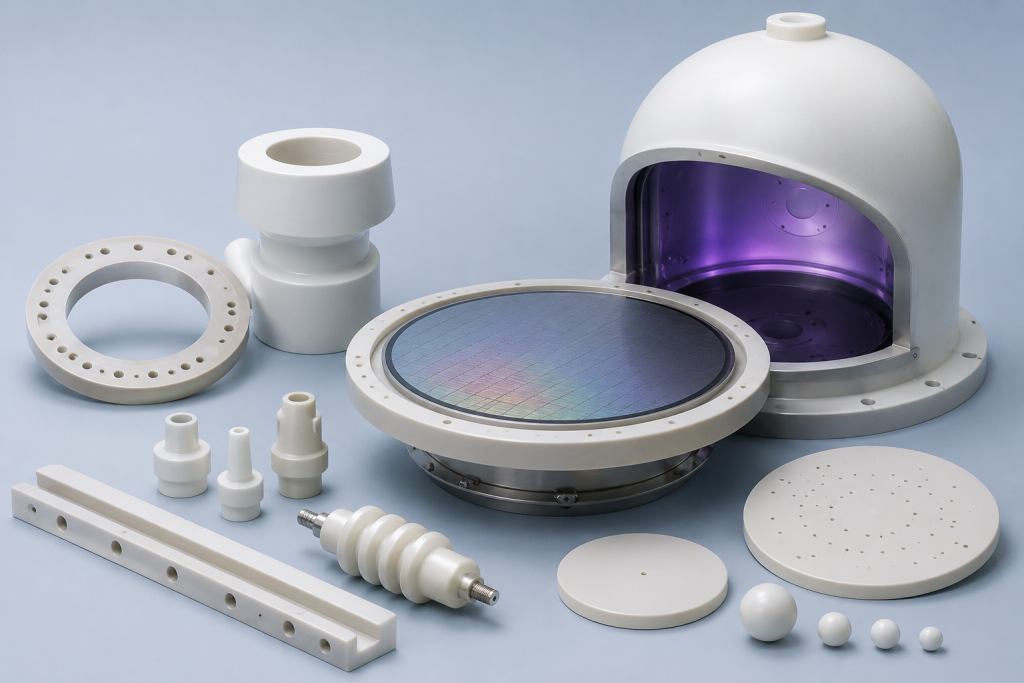
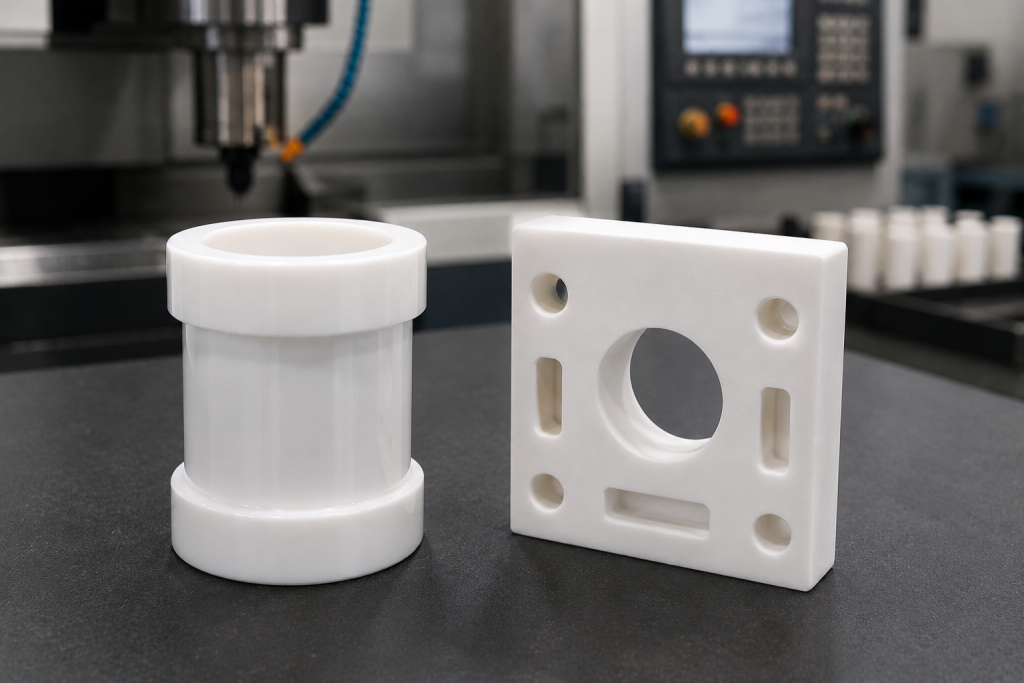
Alumina ceramic, also known as aluminum oxide ceramic (Al₂O₃), is one of the most common engineering ceramics used across industrial sectors.
Typical properties of alumina include:
- High hardness
- Excellent electrical insulation
- Strong wear resistance
- High temperature capability
- Good chemical resistance
- Cost-effective manufacturing
Depending on purity levels, alumina can be produced in grades ranging from 95% to 99.9% purity.
Common industries using alumina:
- Semiconductor equipment
- Electronics
- Mechanical engineering
- Medical devices
- Industrial machinery
- Chemical processing
What Is Zirconia Ceramic?
Zirconia ceramic is made from zirconium dioxide (ZrO₂) and is often stabilized using yttria or magnesia.
Zirconia stands out because of its exceptional fracture toughness and mechanical performance.
Key characteristics:
- Very high strength
- Excellent fracture toughness
- Superior wear resistance
- Low thermal conductivity
- High resistance to crack propagation
- Outstanding surface finish capability
Because of these properties, zirconia is often referred to as the “steel of ceramics.”
Zirconia vs Alumina: Key Property Comparison
| Property | Zirconia | Alumina |
|---|---|---|
| Density | Higher | Lower |
| Hardness | Very high | Extremely high |
| Fracture toughness | Excellent | Moderate |
| Flexural strength | Very high | High |
| Wear resistance | Excellent | Excellent |
| Thermal conductivity | Lower | Higher |
| Thermal shock resistance | Better | Moderate |
| Electrical insulation | Excellent | Excellent |
| Corrosion resistance | Excellent | Excellent |
| Relative cost | Higher | Lower |
1. Mechanical Strength and Toughness
One of the biggest differences between these materials is fracture toughness.
Alumina is hard and wear resistant but relatively brittle. Under impact or stress concentration, cracking may occur.
Zirconia offers much greater toughness due to transformation toughening mechanisms.
Benefits of zirconia include:
- Better resistance to impact
- Reduced crack propagation
- Higher load-bearing capability
- Improved reliability under mechanical stress
Applications with vibration, impact, or cyclic loading often favor zirconia.
2. Wear Resistance Performance
Both materials provide excellent wear resistance.
Alumina performs particularly well in:
- Abrasive environments
- Sliding wear conditions
- High-speed mechanical applications
Zirconia also offers excellent wear performance but combines wear resistance with superior toughness.
For components exposed to both abrasion and impact, zirconia may provide longer service life.
Examples include:
- Bearings
- Ceramic plungers
- Valve components
- Pump parts
3. Thermal Properties
Temperature behavior can strongly influence ceramic selection.
Alumina generally provides:
- Better thermal conductivity
- Higher operating temperature capability
- Good dimensional stability
Zirconia provides:
- Lower thermal conductivity
- Better thermal insulation
- Higher resistance to thermal shock
Lower heat conductivity makes zirconia useful where thermal barriers are important.
4. Surface Finish and Precision Applications
Zirconia can achieve exceptionally smooth surface finishes after polishing.
Advantages include:
- Lower friction
- Better sealing performance
- Reduced wear
- Improved precision
For high-precision moving parts, zirconia often performs exceptionally well.
Applications include:
- Precision bearings
- Medical implants
- Pump shafts
- Valve seats
5. Cost Considerations
Budget is always part of material selection.
Alumina remains one of the most economical engineering ceramics due to:
- Mature manufacturing processes
- Wide material availability
- Lower raw material costs
Zirconia typically costs more because:
- Material preparation is more complex
- Processing requirements are higher
- Stabilization additives increase production cost
For cost-sensitive projects, alumina may provide excellent value.
For critical high-performance applications, zirconia may justify the investment.
Typical Applications of Alumina
Alumina ceramics are commonly used for:
- Ceramic insulators
- Semiconductor components
- Wear plates
- Mechanical seals
- Furnace fixtures
- Cutting tools
- Electronic substrates
Typical Applications of Zirconia
Zirconia ceramics are commonly used for:
- Ceramic bearings
- Precision shafts
- Valve components
- Pump plungers
- Medical implants
- Grinding media
- High-performance wear parts
Which Material Should You Choose?
Choose Alumina if:
- Cost efficiency is important
- Extremely high hardness is required
- Electrical insulation is critical
- High-volume production is needed
- Applications involve wear rather than impact
Choose Zirconia if:
- Toughness is the priority
- Components face impact loading
- Precision surface finishing is required
- Thermal insulation matters
- Long-term reliability under stress is essential
Final Thoughts
There is no universal winner in the Zirconia vs Alumina comparison.
Alumina remains a highly versatile and cost-effective ceramic material suitable for a wide range of industrial applications.
Zirconia provides superior toughness and mechanical performance, making it ideal for demanding environments where durability and reliability are critical.
Choosing the right ceramic material requires balancing performance requirements, operating conditions, and budget considerations.
Understanding the strengths of each material can help optimize both component performance and long-term cost efficiency.
FAQ
Is zirconia stronger than alumina?
Yes. Zirconia generally offers higher flexural strength and significantly greater fracture toughness than alumina, making it more resistant to cracking and impact.
Which ceramic material has better wear resistance?
Both materials offer excellent wear resistance. Alumina performs well in abrasive environments, while zirconia combines wear resistance with superior toughness.
Why is zirconia more expensive than alumina?
Zirconia requires more complex processing and stabilization methods, increasing manufacturing costs. However, its longer service life and improved mechanical performance can offset the higher initial investment.