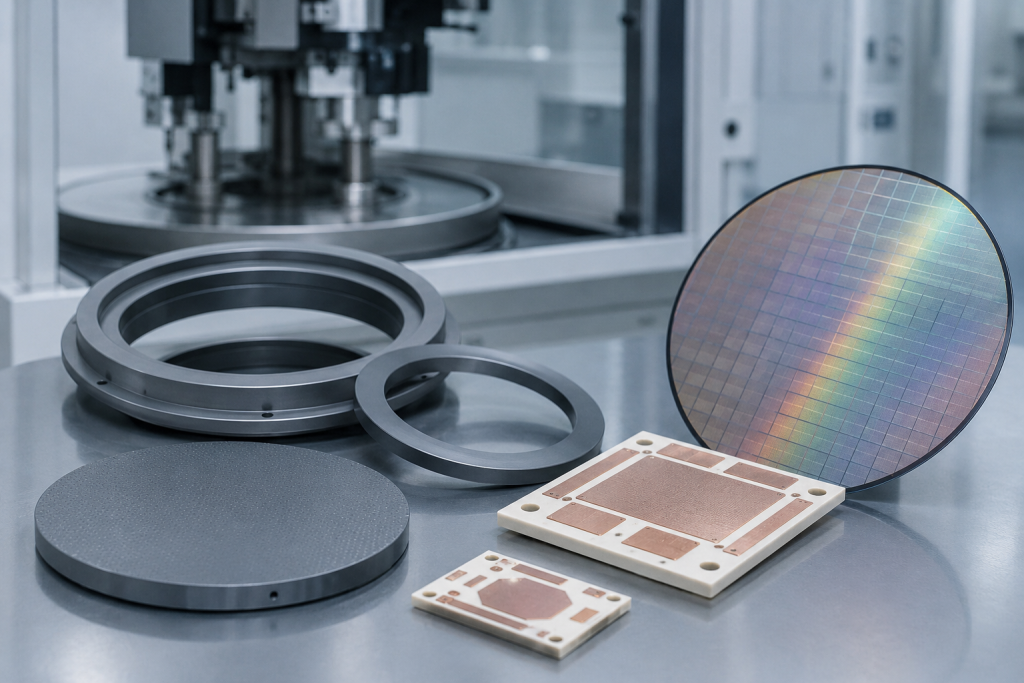
In semiconductor manufacturing, precision, purity, and thermal stability are critical requirements. As device geometries continue to shrink and process environments become more extreme, traditional metal components often fail to meet performance demands. This is where advanced ceramic materials play a crucial role.
Ceramic components are widely used in semiconductor equipment due to their exceptional properties such as high temperature resistance, electrical insulation, wear resistance, and chemical stability. In this article, we explore their key applications and benefits in modern semiconductor systems.
Why Ceramics Are Essential in Semiconductor Equipment
Semiconductor processes such as etching, deposition, lithography, and wafer handling require materials that remain stable under harsh conditions. Advanced ceramics, especially alumina (Al₂O₃), silicon carbide (SiC), and zirconia (ZrO₂), are ideal due to their unique physical and chemical properties:
- High thermal stability (up to 1600°C or higher for SiC)
- Excellent electrical insulation
- Strong resistance to plasma corrosion
- Low particle generation (critical for cleanroom environments)
- High mechanical strength and wear resistance
These properties make ceramics indispensable in contamination-sensitive environments.
Key Ceramic Components in Semiconductor Equipment
1. Ceramic Wafer Handling Components
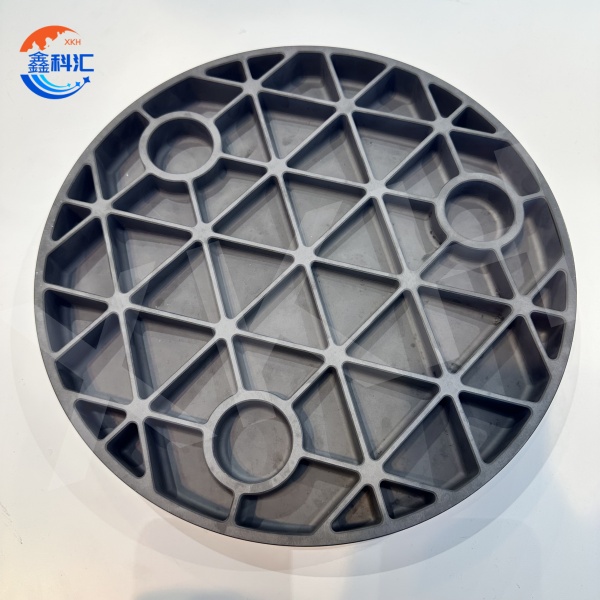
Ceramic vacuum chucks and wafer carriers are widely used in wafer transport and positioning systems. Their high flatness and thermal stability ensure accurate wafer alignment during processing.
Benefits:
- High dimensional stability
- Minimal particle contamination
- Excellent vacuum retention performance
2. Ceramic Dome and Chamber Components
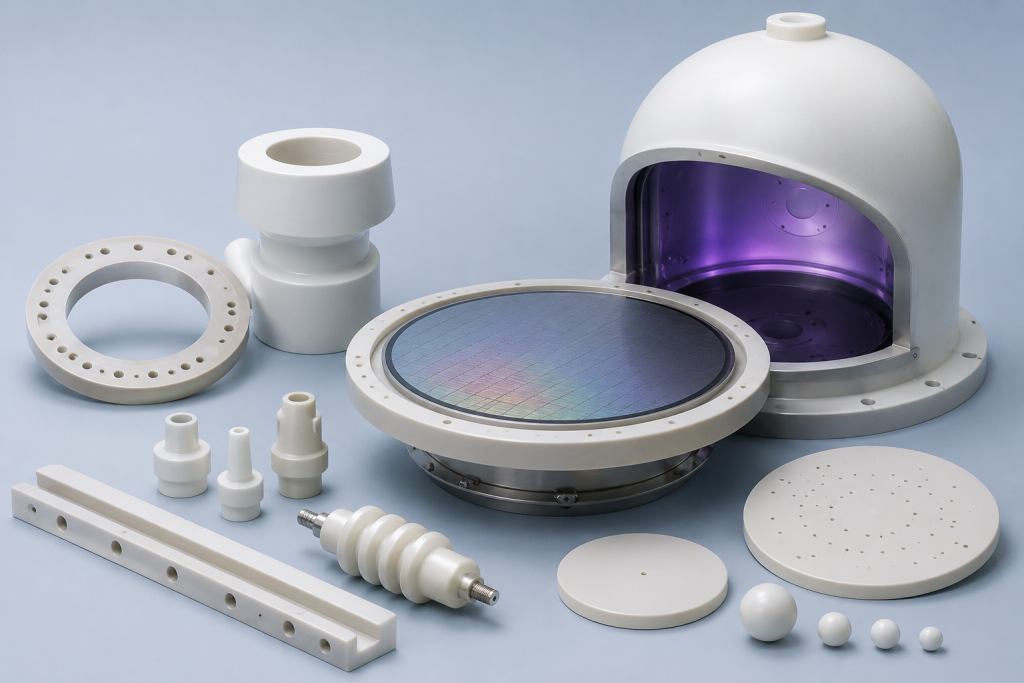
Ceramic domes and bell jars are used in plasma etching and deposition chambers. They must withstand extreme thermal cycling and corrosive plasma environments.
Benefits:
- Superior plasma resistance
- Long service life under high-temperature conditions
- Stable dielectric performance
3. Ceramic Nozzles and Gas Delivery Systems
Ceramic nozzles are used in gas distribution systems for processes such as chemical vapor deposition (CVD) and etching.
Benefits:
- Corrosion resistance to reactive gases
- High precision flow control
- Extended operational lifespan
4. Ceramic Guide Rails and Mechanical Parts
Ceramic guide rails are used in precision motion systems for wafer handling robots and automation equipment.
Benefits:
- Extremely low wear rate
- Smooth motion under high load conditions
- Reduced maintenance frequency
5. Ceramic Insulators
Electrical ceramic insulators are critical in high-voltage semiconductor systems, ensuring stable operation without electrical leakage.
Benefits:
- High dielectric strength
- Thermal shock resistance
- Long-term electrical stability
Benefits of Using Ceramic Components in Semiconductor Manufacturing
The adoption of ceramic materials in semiconductor equipment offers several key advantages:
1. Improved Process Stability
Ceramics maintain dimensional accuracy even under extreme thermal and mechanical stress, ensuring consistent process performance.
2. Reduced Contamination Risk
Unlike metals, ceramics do not easily shed particles, making them ideal for cleanroom environments.
3. Longer Equipment Lifespan
High wear resistance and chemical stability significantly extend component service life, reducing downtime and maintenance costs.
4. Enhanced Precision
Ceramic components support high-precision motion and positioning systems, critical for advanced semiconductor nodes.
5. Compatibility with Harsh Environments
Ceramics perform reliably in plasma, vacuum, high-temperature, and corrosive conditions commonly found in semiconductor processes.
Material Selection Considerations
Different semiconductor applications require different ceramic materials:
| Material | Key Strength | Typical Use |
|---|---|---|
| Alumina (Al₂O₃) | Cost-effective insulation | Insulators, structural parts |
| Silicon Carbide (SiC) | High thermal conductivity & strength | High-temperature components |
| Zirconia (ZrO₂) | High toughness | Precision mechanical parts |
Selecting the right material is critical for optimizing performance and cost efficiency.
Conclusion
Ceramic components have become a fundamental part of semiconductor equipment due to their superior thermal, mechanical, and chemical properties. From wafer handling systems to plasma chambers and precision motion components, advanced ceramics significantly improve reliability, precision, and process stability.
As semiconductor technology continues to advance, the demand for high-performance ceramic components will continue to grow, making them an essential material in next-generation manufacturing systems.