As semiconductor manufacturing continues moving toward larger wafer sizes, higher process temperatures, and stricter contamination standards, conventional wafer carrier materials are increasingly reaching their performance limits. Components that once met process requirements are now facing challenges involving thermal deformation, particle generation, and shorter service life.
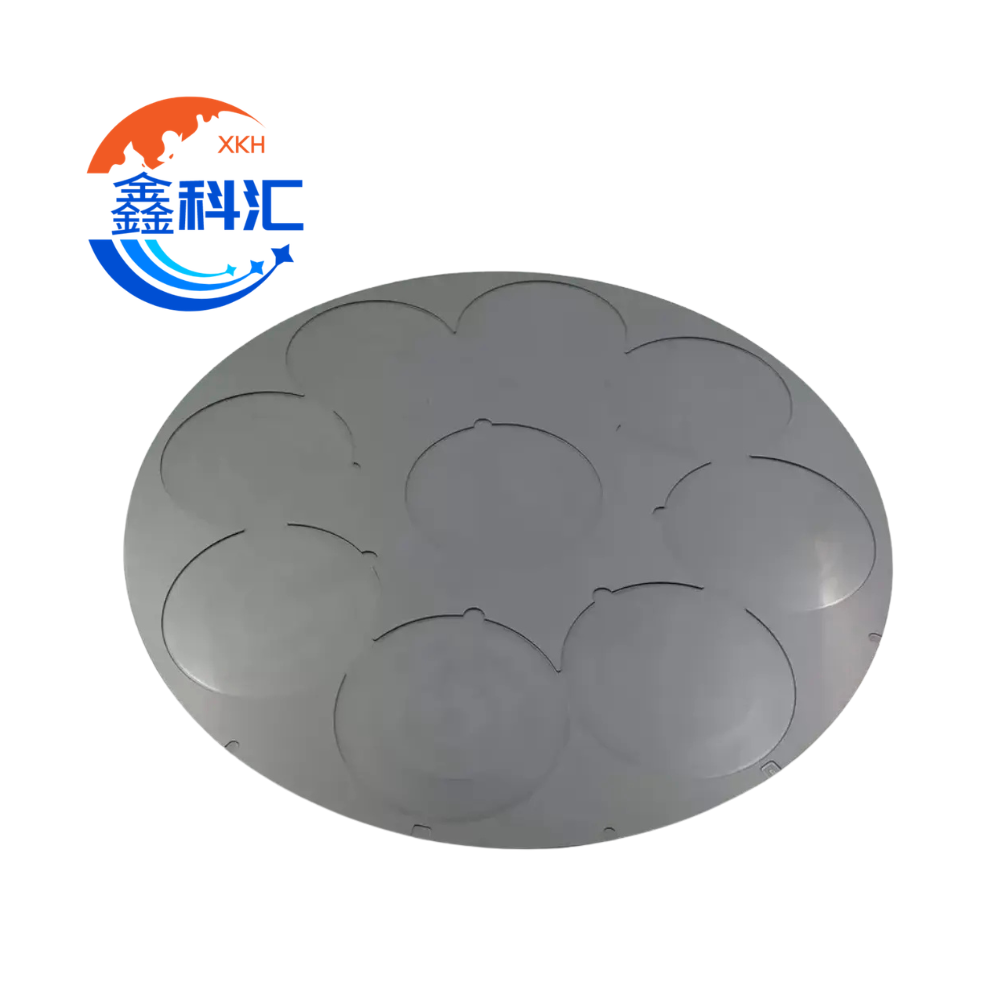
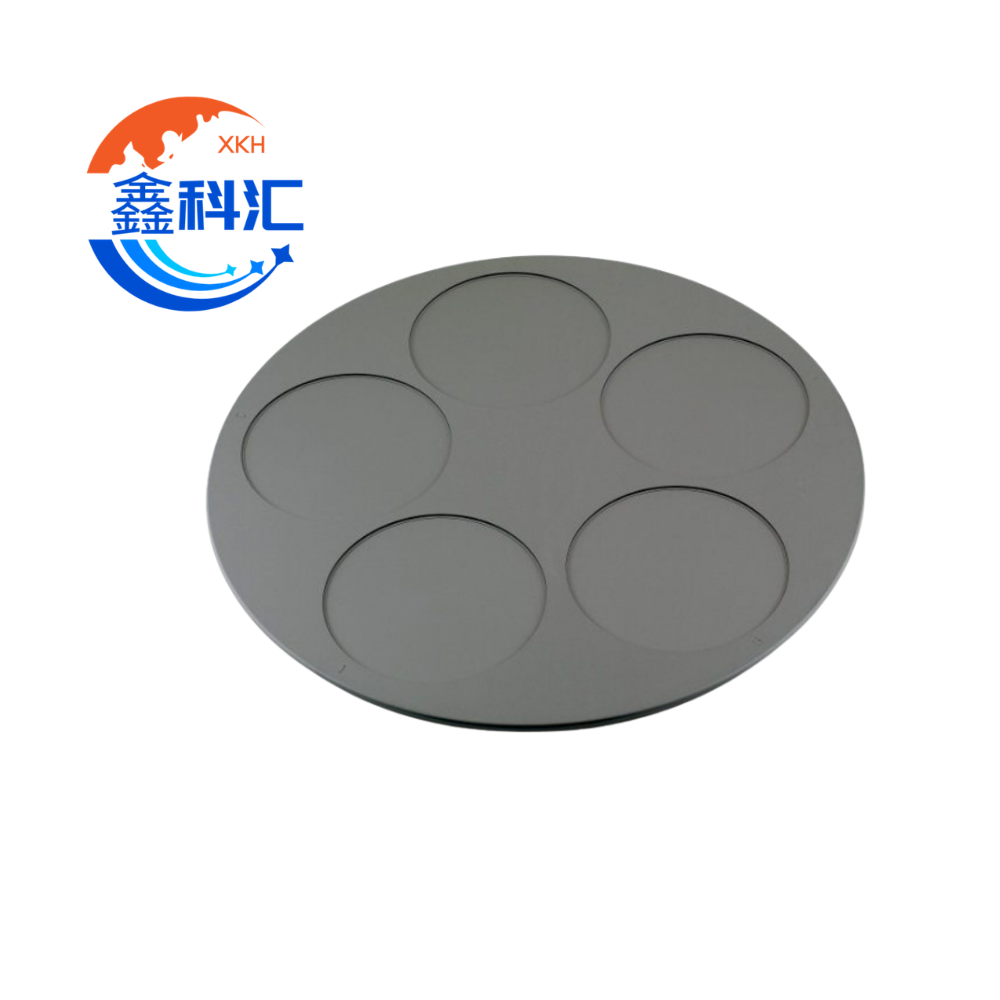
Among advanced ceramic materials, silicon carbide (SiC) trays have emerged as one of the most promising alternatives to traditional wafer carriers. Thanks to their superior thermal, mechanical, and chemical properties, SiC trays are increasingly being adopted in semiconductor processing equipment.
But what is driving this shift? Why are silicon carbide trays gradually replacing conventional wafer carriers in high-end semiconductor manufacturing?
This article explores the material science and engineering reasons behind this transition.
The Role of Wafer Carriers in Semiconductor Processing
Wafer carriers are critical components used to support, transport, and position wafers throughout semiconductor manufacturing processes.
Their functions include:
- Supporting wafers during thermal processing
- Maintaining precise wafer spacing
- Ensuring process uniformity
- Reducing contamination risks
- Withstanding repeated thermal cycles
Wafer carriers are used in multiple semiconductor processes:
- Diffusion
- Oxidation
- Annealing
- LPCVD
- Epitaxy
- High-temperature deposition
Because wafers directly contact or remain very close to carrier surfaces, material performance strongly affects process yield.
Traditional Wafer Carrier Materials
Historically, semiconductor manufacturers have relied on materials such as:
Quartz
Quartz carriers provide:
- High purity
- Good thermal resistance
- Chemical stability
However, quartz also has limitations:
- Relatively low mechanical strength
- Gradual deformation at elevated temperatures
- Susceptibility to devitrification
- Shorter service life under repeated thermal cycling
Alumina Ceramics
Alumina offers:
- High hardness
- Good wear resistance
- Lower cost
Limitations include:
- Lower thermal conductivity
- Moderate thermal shock resistance
- Higher thermal expansion
Graphite-Coated Materials
Some systems use graphite structures with protective coatings.
Potential issues:
- Particle generation
- Oxidation concerns
- Coating degradation over time
As semiconductor process requirements continue tightening, these limitations become increasingly significant.
Why Silicon Carbide Is Gaining Attention
Silicon carbide is an advanced engineering ceramic with exceptional material properties.
Key characteristics include:
- High thermal conductivity
- Excellent mechanical strength
- Low thermal expansion
- Superior wear resistance
- Excellent chemical resistance
- Outstanding high-temperature stability
These properties make SiC particularly attractive for semiconductor environments.
Higher Temperature Capability
Modern semiconductor processes frequently operate at temperatures above 1000°C.
Typical process examples include:
- Diffusion furnaces
- Epitaxial growth
- SiC semiconductor processing
- Thermal oxidation
SiC maintains excellent structural stability at extreme temperatures.
Compared with quartz, silicon carbide experiences significantly less deformation under prolonged heat exposure.
This improves:
- Wafer positioning accuracy
- Process consistency
- Equipment reliability
Superior Thermal Conductivity
One major advantage of silicon carbide is thermal conductivity.
Approximate comparison:
| Material | Thermal Conductivity |
|---|---|
| Quartz | ~1–2 W/m·K |
| Alumina | ~20–30 W/m·K |
| Silicon Carbide | ~120–200 W/m·K |
Higher conductivity improves heat distribution throughout wafer carriers.
Benefits include:
- Better temperature uniformity
- Reduced thermal gradients
- Improved process repeatability
- Lower thermal stress
Uniform heating becomes increasingly important as wafer diameters continue increasing.
Reduced Thermal Expansion
Thermal expansion directly influences dimensional stability.
Silicon carbide exhibits relatively low expansion compared with many conventional materials.
Lower expansion helps reduce:
- Carrier deformation
- Positioning error
- Mechanical stress
- Wafer warpage risks
Stable geometry becomes increasingly critical in advanced process nodes.
Better Mechanical Strength
Repeated loading cycles place significant stress on wafer carriers.
Compared with quartz, silicon carbide provides:
- Higher flexural strength
- Better stiffness
- Greater fracture resistance
- Improved wear behavior
This becomes particularly valuable for:
- Large-diameter wafers
- Automated handling systems
- Long production cycles
Greater structural stability often translates into longer operational life.
Lower Particle Generation
Particle contamination remains one of the largest concerns in semiconductor manufacturing.
Even microscopic particles may cause:
- Pattern defects
- Yield reduction
- Surface contamination
- Device reliability problems
Silicon carbide’s high hardness and surface durability can reduce wear-related particle generation.
Properly manufactured SiC trays often demonstrate:
- Better surface integrity
- Lower erosion
- Longer contamination control performance
Longer Service Life
Although silicon carbide components usually involve higher initial cost, they frequently provide lower long-term ownership costs.
Reasons include:
- Reduced replacement frequency
- Lower maintenance needs
- Improved process consistency
- Reduced equipment downtime
For high-volume manufacturing environments, lifecycle economics often outweigh purchase price.
Comparison: SiC Trays vs Traditional Wafer Carriers
| Property | Quartz | Alumina | Silicon Carbide |
|---|---|---|---|
| Maximum Temperature Resistance | High | Moderate | Very High |
| Thermal Conductivity | Low | Moderate | Excellent |
| Mechanical Strength | Moderate | Good | Excellent |
| Thermal Expansion | Very Low | Higher | Low |
| Wear Resistance | Moderate | Good | Excellent |
| Service Life | Moderate | Moderate | Long |
No single material is perfect for every application, but silicon carbide increasingly offers a better balance for advanced semiconductor processes.
Current Applications of SiC Trays
Silicon carbide trays are increasingly used in:
- Semiconductor diffusion systems
- Epitaxy equipment
- Wafer handling systems
- Power semiconductor manufacturing
- LED production
- SiC wafer processing
- High-temperature process tools
Demand is particularly strong in wide-bandgap semiconductor manufacturing.
Future Trends
As semiconductor technologies move toward:
- Larger wafer formats
- Higher temperatures
- Smaller device geometries
- Stricter contamination standards
Demand for advanced ceramic components will continue increasing.
Silicon carbide is expected to play an increasingly important role not only as a semiconductor material itself, but also as a critical equipment material.
Final Thoughts
Traditional wafer carriers have served the semiconductor industry for decades. However, the industry’s increasing demands for higher performance and contamination control are driving the adoption of more advanced materials.
Silicon carbide trays provide significant advantages in thermal conductivity, strength, stability, and long-term reliability.
As semiconductor processes continue evolving, SiC trays are no longer simply alternative materials—they are becoming a strategic upgrade for next-generation manufacturing environments.
FAQ
Why are silicon carbide trays preferred over quartz carriers?
SiC trays offer higher strength, better thermal conductivity, and longer service life under high-temperature conditions.
Do SiC trays reduce particle contamination?
Yes. Their hardness and wear resistance can help minimize particle generation during repeated use.
Are silicon carbide trays more expensive?
Initial cost is generally higher, but longer service life and reduced maintenance often lower total ownership cost over time.