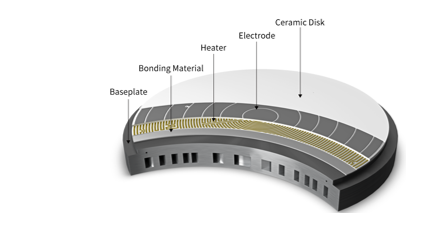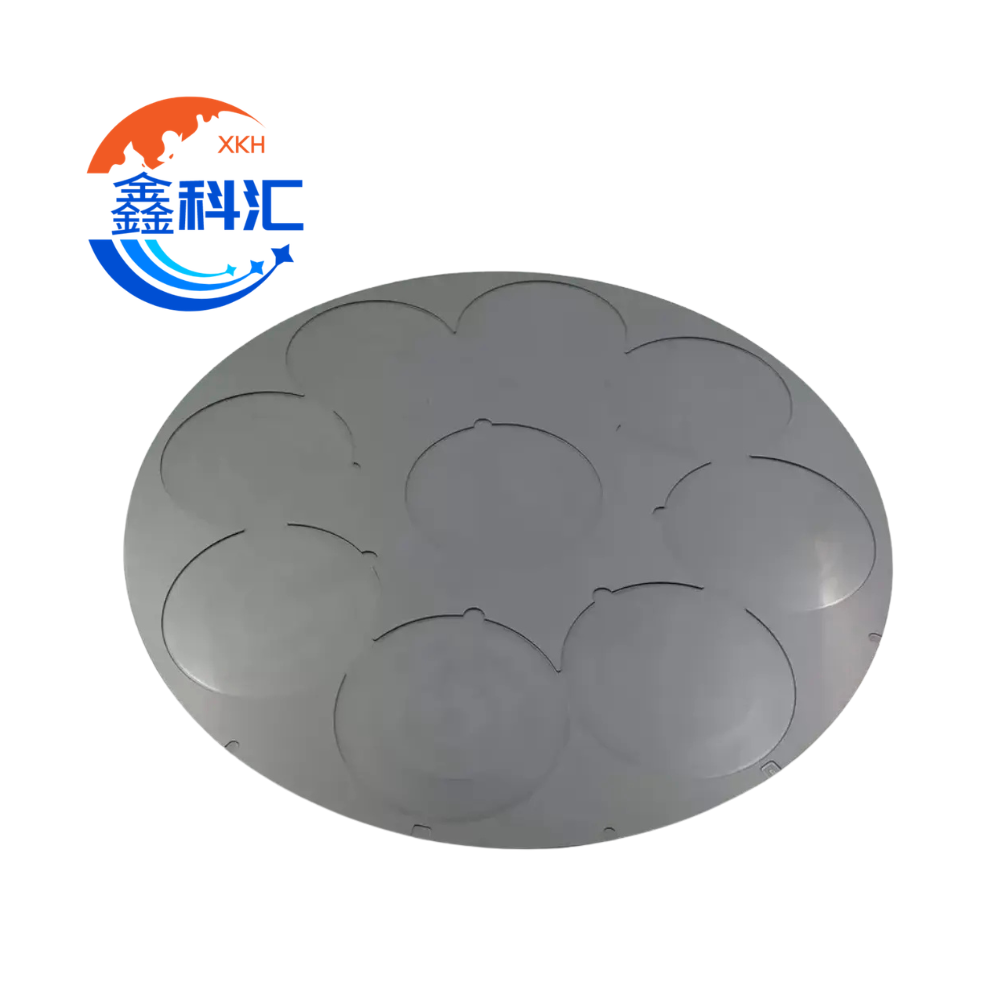
Semiconductor manufacturing equipment operates under some of the most demanding conditions found in modern industrial production. Components may be exposed to high temperatures, plasma, corrosive gases, vacuum environments, rapid thermal cycling, aggressive cleaning processes and extremely strict contamination requirements.
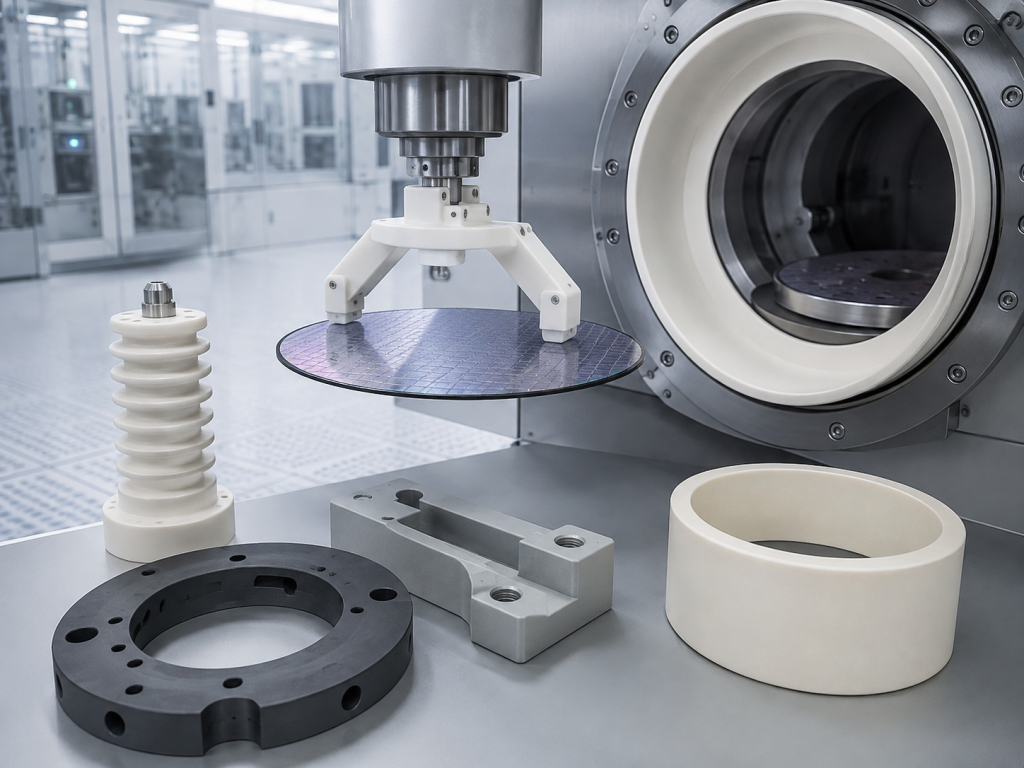
Under these conditions, conventional metals and polymers are not always suitable. This is why structural ceramics are widely used in semiconductor manufacturing equipment, particularly for wafer handling, plasma processing, thermal processing, precision positioning and electrical insulation.
Materials such as alumina, aluminum nitride, silicon carbide and zirconia provide a combination of mechanical strength, thermal stability, electrical properties and chemical resistance that can help improve equipment reliability and reduce particle contamination.
This guide explains the main structural ceramic materials used in semiconductor manufacturing, their key properties and typical applications.
What Are Structural Ceramics?
Structural ceramics are advanced ceramic materials engineered primarily for mechanical, thermal and functional performance rather than decorative applications.
Unlike conventional pottery or building ceramics, semiconductor-grade structural ceramics are manufactured using carefully controlled powders, forming processes, sintering conditions and precision machining.
Common structural ceramic materials include:
- Alumina ceramic
- Aluminum nitride ceramic
- Silicon carbide ceramic
- Zirconia ceramic
- Silicon nitride ceramic
Depending on the process environment, ceramic components can be manufactured as:
- Wafer handling parts
- Ceramic arms and end effectors
- Vacuum components
- Insulating components
- Plasma chamber parts
- Ceramic rings
- Các bộ phận định vị chính xác
- Heating and thermal management parts
- Các cấu trúc hỗ trợ
- Customized equipment components
Material selection depends heavily on the operating environment.
Why Are Structural Ceramics Used in Semiconductor Equipment?
Semiconductor manufacturing requires extremely stable components because even small dimensional changes, particles or contamination can influence wafer yield.
Structural ceramics offer several important advantages.
High Mechanical Stability
Many advanced ceramics maintain excellent rigidity under mechanical loads.
Low deformation is particularly important for components involved in:
- Wafer positioning
- Robotic wafer transfer
- Precision alignment
- Vacuum handling
- Thiết bị kiểm tra
Ceramic materials can maintain dimensional stability even when components are thin or exposed to repeated operating cycles.
Khả năng chịu nhiệt độ cao
Certain semiconductor processes operate at temperatures far beyond the practical operating range of many polymers and metals.
Ceramics can maintain structural stability under elevated temperatures, making them suitable for applications such as:
- Lò khuếch tán
- Hệ thống ủ
- Deposition equipment
- High-temperature wafer processing
- Thermal treatment systems
The exact temperature capability depends on the ceramic material and manufacturing process.
Khả năng cách điện tuyệt vời
Alumina and aluminum nitride provide excellent electrical insulation.
They are therefore commonly used for:
- Electrical isolation
- Sensor substrates
- Heater components
- High-voltage insulation
- Thiết bị chế tạo bán dẫn
Electrical resistivity, dielectric strength and dielectric constant should be considered when selecting a ceramic for electrical applications.
Plasma and Chemical Resistance
Plasma processing is widely used during semiconductor etching, deposition and chamber cleaning.
Components located near the plasma environment may experience:
- Ion bombardment
- Sự ăn mòn hóa học
- Surface erosion
- Quá trình tạo hạt
Materials such as alumina, silicon carbide and other engineered ceramics can provide improved durability compared with conventional materials in certain plasma environments.
Low Contamination Potential
Contamination control is one of the most important considerations in semiconductor manufacturing.
Ceramic purity, secondary phases, grain structure and surface condition can all influence contamination performance.
For critical semiconductor applications, buyers often specify:
- High material purity
- Controlled trace metal content
- Tight dimensional tolerance
- Độ nhám bề mặt thấp
- Clean packaging
- Controlled cleaning procedures
Gốm alumina
Alumina (Al₂O₃) is one of the most widely used structural ceramic materials in semiconductor equipment.
Typical grades include:
- 95% alumina
- 96% alumina
- 99% alumina
- 99.5% alumina
- 99.7% or higher-purity alumina
Higher-purity grades are generally preferred for applications where contamination control is critical.
Các đặc tính chính
Alumina provides:
- Độ cứng cao
- Độ cách điện tuyệt vời
- Độ bền cơ học tốt
- Khả năng chống hóa chất tốt
- Khả năng chịu nhiệt độ cao
- Khả năng chống mài mòn tốt
- Relatively mature manufacturing technology
Ứng dụng trong lĩnh vực bán dẫn
Các ứng dụng phổ biến bao gồm:
- Cách điện gốm
- Các bộ phận xử lý tấm wafer
- Ceramic rings
- Vacuum components
- Positioning parts
- Chamber components
- Electrical feedthrough components
- Precision structural components
Alumina is often selected when a balance between performance, machinability and cost is required.
Gốm nitrua nhôm
Nitrua nhôm (AlN) is particularly valuable when both electrical insulation and thermal conductivity are required.
Compared with conventional alumina, AlN can provide significantly higher thermal conductivity while maintaining good electrical insulation.
Các đặc tính chính
AlN typically offers:
- Độ dẫn nhiệt cao
- Cách điện
- Relatively low thermal expansion
- Good thermal shock behavior
- Độ ổn định kích thước tốt
Ứng dụng trong lĩnh vực bán dẫn
Các ứng dụng điển hình bao gồm:
- Semiconductor heater components
- Electrostatic chuck-related components
- Các thành phần quản lý nhiệt
- Chất nền bán dẫn công suất
- Equipment components requiring heat dissipation
- High-performance electronic packaging
One important consideration is moisture sensitivity during storage and processing. Proper surface treatment, cleaning and packaging are therefore important.
Gốm cacbua silic
Cacbua silic (SiC) combines excellent mechanical strength with outstanding thermal and chemical properties.
Different manufacturing technologies produce SiC materials with different densities, purities and microstructures.
Ví dụ như:
- Sintered silicon carbide
- Reaction-bonded silicon carbide
- CVD silicon carbide
- Recrystallized silicon carbide
Các đặc tính chính
SiC cung cấp:
- Độ cứng cao
- Khả năng chống mài mòn tuyệt vời
- Độ dẫn nhiệt cao
- Hệ số giãn nở nhiệt thấp
- Khả năng chịu sốc nhiệt tuyệt vời
- Độ ổn định ở nhiệt độ cao
- Good resistance to many corrosive environments
Ứng dụng trong lĩnh vực bán dẫn
SiC ceramic components can be used for:
- Khay đựng wafer
- Thuyền chở bánh wafer
- Các bộ phận của buồng xử lý
- Etching equipment parts
- Thiết bị chịu nhiệt độ cao
- Bàn trượt chính xác
- Các cấu trúc hỗ trợ
For extremely high-purity environments, the specific SiC manufacturing method becomes particularly important.
Gốm zirconia
Zirconia (ZrO₂) differs from many other technical ceramics because of its relatively high fracture toughness.
It can tolerate mechanical impact and localized stress better than many brittle ceramic materials.
Các đặc tính chính
Zirconia mang lại:
- Độ bền gãy cao
- Khả năng chống mài mòn tuyệt vời
- Độ bền cơ học cao
- Good surface finishing capability
- Độ dẫn nhiệt thấp
- Excellent dimensional precision after machining
Ứng dụng trong lĩnh vực bán dẫn
Zirconia can be used for:
- Các bộ phận định vị chính xác
- Wear-resistant parts
- Ceramic pins
- Alignment components
- Small mechanical components
- Precision fixtures
- Moving equipment components
It is particularly useful where both wear resistance and mechanical toughness are required.
Gốm nitrua silic
Silicon nitride is another high-performance structural ceramic used in demanding mechanical environments.
Các đặc tính chính
Silicon nitride provides:
- Độ bền gãy cao
- High strength
- Khả năng chịu sốc nhiệt tuyệt vời
- Khả năng chống mài mòn tốt
- Mật độ thấp
- Độ ổn định ở nhiệt độ cao
Because of these characteristics, it may be used for precision mechanical components that experience repeated mechanical or thermal loading.
Structural Ceramic Material Comparison
| Chất liệu | Main Advantage | Typical Semiconductor Application |
|---|---|---|
| Alumina | Electrical insulation and cost-performance balance | Insulators, structural parts, chamber components |
| Nitrua nhôm | High thermal conductivity with electrical insulation | Heaters, thermal management components |
| Cacbua silic | Thermal stability and plasma/chemical resistance | Wafer carriers, chamber and process parts |
| Zirconia | High toughness and wear resistance | Precision mechanical and positioning parts |
| Nitrua silic | Strength and thermal shock resistance | High-load precision structural components |
No single ceramic material is ideal for every semiconductor process.
The correct choice depends on the operating conditions of the equipment.
Important Specifications When Ordering Semiconductor Ceramic Parts
For custom ceramic components, simply specifying the ceramic material is usually not sufficient.
A complete RFQ should ideally include the following information.
Material and Purity
Specify the exact ceramic type and required purity whenever possible.
Ví dụ:
Al₂O₃ ≥99.5%
rather than simply stating:
Alumina ceramic
This is especially important for semiconductor applications where trace contamination must be controlled.
Dimensions and Tolerances
Provide complete engineering drawings showing:
- Diameter
- Length
- Width
- Thickness
- Hole dimensions
- Groove dimensions
- Flatness
- Parallelism
- Perpendicularity
- Position tolerance
Ceramics behave differently from metals during machining, so tolerance requirements can significantly affect manufacturing difficulty and cost.
Độ nhám bề mặt
Surface roughness may influence:
- Quá trình tạo hạt
- Vacuum sealing
- Wafer contact
- Friction
- Cleaning performance
- Plasma interaction
Typical drawings may specify requirements such as:
Ra ≤0.8 μm
or significantly lower values for precision polished surfaces.
Bề mặt hoàn thiện
Different areas of the same component may require different surface treatments.
These can include:
- As-fired
- Ground
- Lapped
- Polished
- Mirror polished
Only critical areas should normally receive extremely tight surface specifications because unnecessary polishing can increase manufacturing cost.
Operating Environment
The supplier should understand whether the component will operate in:
- Vacuum
- Plasma
- High temperature
- Corrosive gas
- Chemical cleaning
- Repeated thermal cycling
- High-voltage environments
This information helps determine the most suitable material and manufacturing process.
Ceramic Machining for Semiconductor Components
Advanced ceramic components are typically produced through several manufacturing stages.
A typical process may include:
Powder preparation → forming → sintering → grinding → precision machining → polishing → cleaning → inspection
Because fully sintered ceramics are extremely hard, precision machining commonly requires diamond tooling.
Possible machining capabilities include:
- CNC grinding
- Mài phẳng
- Cylindrical grinding
- Drilling
- Slot machining
- Precision lapping
- Đánh bóng
- Complex geometry machining
For semiconductor applications, machining quality must be controlled carefully because microcracks, edge defects and surface damage may shorten component lifetime.
Particle Control and Surface Quality
A ceramic part may meet dimensional specifications but still perform poorly if its surface produces particles during use.
Potential particle sources include:
- Rough machined surfaces
- Các vết nứt nhỏ
- Edge chipping
- Weak grain boundaries
- Residual machining contamination
- Improper cleaning
For critical wafer-handling and chamber components, edge finishing and surface inspection should therefore be included in the quality control process.
Inspection Requirements
Depending on the application, semiconductor ceramic components may require inspection for:
- Dimensional accuracy
- Flatness
- Parallelism
- Độ nhám bề mặt
- Visual defects
- Edge chipping
- Material density
- Material purity
- Mechanical properties
- Electrical properties
Coordinate measuring machines, optical inspection systems and surface profilometers may be used for precision components.
How to Choose the Right Structural Ceramic
The most effective approach is to select the material based on the operating environment rather than selecting ceramics based only on price.
Ví dụ:
If cách điện is the primary requirement, alumina may be appropriate.
If both electrical insulation and high thermal conductivity are required, aluminum nitride should be considered.
If the component operates in a high-temperature or aggressive process environment, silicon carbide may offer better performance.
If the component requires high toughness and wear resistance, zirconia may be more suitable.
Engineering drawings, operating temperature, chemical environment, dimensional tolerances and contamination requirements should therefore be evaluated together before selecting the material.
Custom Structural Ceramic Components for Semiconductor Equipment
Semiconductor equipment manufacturers increasingly require customized ceramic components rather than standard ceramic shapes.
Typical custom requirements include:
- Complex geometries
- Thin-wall structures
- Lỗ và rãnh chính xác
- Tight flatness requirements
- High-purity materials
- Độ nhám bề mặt thấp
- Customized cleaning and packaging
- Prototype and small-batch manufacturing
Early communication between equipment designers and ceramic manufacturers can help optimize the component for both performance and manufacturability.
Kết luận
Structural ceramics play an increasingly important role in semiconductor manufacturing because they can operate reliably in environments involving high temperature, plasma, vacuum, electrical insulation requirements and strict contamination control.
Alumina, aluminum nitride, silicon carbide, zirconia and silicon nitride each provide different advantages.
The most suitable material should be selected according to:
- Nhiệt độ hoạt động
- Độ dẫn nhiệt
- Electrical properties
- Mechanical load
- Tiếp xúc với plasma
- Chemical environment
- Surface requirements
- Purity requirements
- Dimensional tolerances
For custom semiconductor ceramic components, providing complete engineering drawings and process conditions allows manufacturers to recommend the appropriate material, machining method and inspection requirements.
XKH Ceramics provides precision ceramic machining and customized technical ceramic components for semiconductor equipment and other high-performance industrial applications. Customers can submit drawings, material requirements, tolerances, quantities and operating conditions for technical evaluation and quotation.