첨단 세라믹은 뛰어난 내마모성, 고강도, 열 안정성 및 화학적 내구성이 요구되는 산업 분야에서 필수적인 소재로 자리 잡았습니다. 가장 널리 사용되는 엔지니어링 세라믹 중 하나입니다, 지르코니아(ZrO₂) 그리고 알루미나(Al₂O₃) 는 광범위한 산업 응용 분야와 뛰어난 성능 특성으로 눈에 띄는 제품입니다.
하지만 엔지니어와 구매팀은 종종 중요한 질문에 직면하게 됩니다:
어느 세라믹 소재 지르코니아 또는 알루미나 중 어느 쪽이 더 성능이 좋을까요?
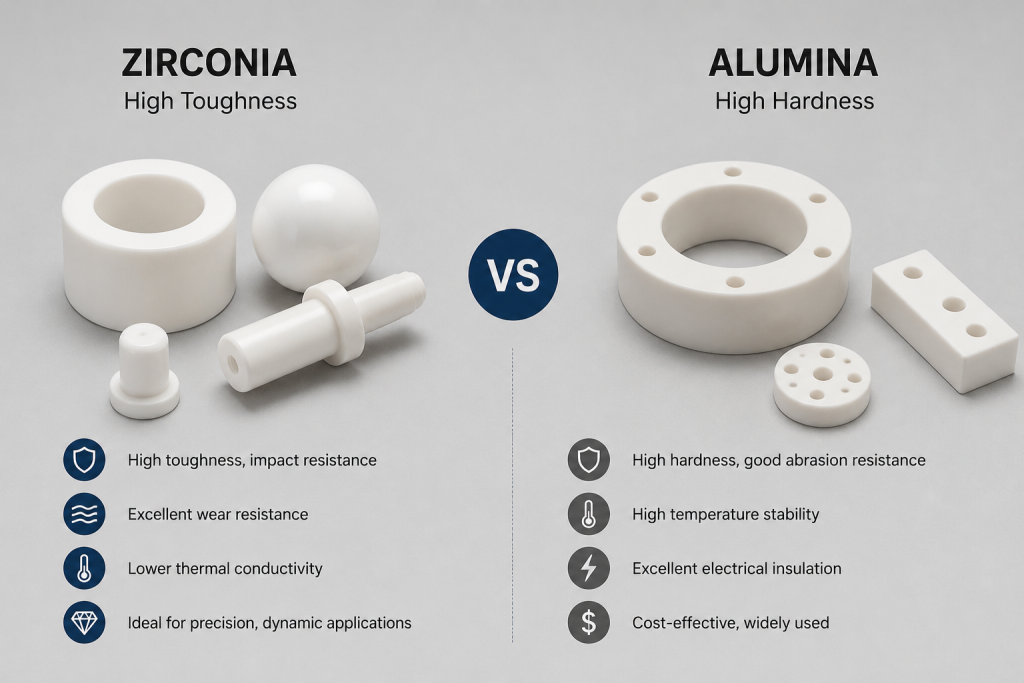
운영 조건, 기계적 요구 사항, 비용 목표, 적용 환경에 따라 답은 달라집니다. 이 문서에서는 재료 특성, 성능, 응용 분야 및 선택 가이드라인에 걸쳐 지르코늄과 알루미나를 자세히 비교합니다.
지르코니아 및 알루미나 세라믹의 이해
지르코니아 세라믹이란?
지르코니아 또는 이산화지르코늄(ZrO₂)은 뛰어난 인성과 기계적 강도로 잘 알려진 고급 세라믹입니다. 많은 깨지기 쉬운 세라믹 소재와 달리 지르코니아는 균열 저항성을 향상시키는 독특한 변형 강화 메커니즘을 가지고 있습니다.
주요 특징
- 매우 높은 골절 인성
- 뛰어난 내마모성
- 높은 굽힘 강도
- 낮은 열 전도성
- 균열 전파에 대한 강력한 내성
지르코니아는 그 강인함 때문에 종종 “세라믹 스틸.”
일반적인 지르코니아 유형은 다음과 같습니다:
- Y-TZP(이트리아 안정화 지르코니아)
- MgO 안정화 지르코니아
- 부분적으로 안정화된 지르코니아
알루미나 세라믹이란?
알루미나(Al₂O₃)는 가성비 균형과 우수한 전기 절연성으로 인해 전 세계적으로 가장 널리 사용되는 테크니컬 세라믹 중 하나입니다.
일반적인 기능:
- 높은 경도
- 뛰어난 내식성
- 높은 온도 안정성
- 전기 절연
- 고순도 가용성
- 상대적으로 낮은 제작 비용
산업용 등급에는 일반적으로 다음이 포함됩니다:
- 95% 알루미나
- 99% 알루미나
- 99.5%+ 고순도 알루미나
물성 비교: 지르코니아 대 알루미나
핵심 성과 지표를 비교할 때 가장 큰 차이가 나타납니다.
| 속성 | 지르코니아(ZrO₂) | 알루미나(Al₂O₃) |
|---|---|---|
| 밀도 | ~6.0g/cm³ | ~3.9g/cm³ |
| 경도 | 높음 | 매우 높음 |
| 굴곡 강도 | 매우 높음 | 보통 |
| 골절 인성 | 우수 | 보통 |
| 열 전도성 | 낮음 | 보통 |
| 최대 서비스 온도 | ~1000-1200°C | ~1600°C+ |
| 내마모성 | 우수 | 매우 좋음 |
| 내식성 | 우수 | 우수 |
| 전기 절연 | 우수 | 우수 |
| 비용 | 더 높음 | Lower |
이 비교를 보면 어느 자료도 모든 카테고리를 지배하지 않습니다.
각각 고유한 강점이 있습니다.
기계적 성능 비교
강도와 견고함
지르코니아의 가장 큰 장점 중 하나는 강인함입니다.
일반적인 골절 인성 값입니다:
지르코니아:
6-10 MPa-m½
알루미나:
3-4 MPa-m½
이는 지르코니아가 더 잘 견딜 수 있다는 것을 의미합니다:
- 충격 부하
- 기계적 충격
- 균열 성장
- 주기적 스트레스
움직이는 부품이 포함된 애플리케이션은 종종 지르코니아를 선호합니다.
예시:
- 베어링
- 밸브 구성 요소
- 세라믹 샤프트
- 어셈블리 착용
경도
알루미나는 일반적으로 경도 값이 더 높습니다.
일반적인 비커스 경도입니다:
알루미나:
1500-2000 HV
지르코니아:
1200-1400 HV
경도가 높을수록 좋습니다:
- 내마모성 향상
- 스크래치 방지
- 표면 내구성
충격 하중이 없는 슬라이딩 마모 애플리케이션의 경우 알루미나는 매우 우수한 성능을 발휘할 수 있습니다.
열 성능 비교
온도 기능은 소재 선택에 큰 영향을 미칩니다.
알루미나의 장점
알루미나는 고온에서도 우수한 특성을 유지합니다.
작동 온도가 초과될 수 있습니다:
1600°C
애플리케이션:
- 퍼니스 구성 요소
- 고온 절연체
- 반도체 처리 장비
지르코니아의 장점
지르코니아는 열전도율이 낮습니다.
다음과 같은 혜택이 있습니다:
- 단열
- 열 차단 애플리케이션
- 열 전달 감소
애플리케이션:
- 열 차폐
- 난방 시스템 구성 요소
- 특수 산업 시스템
내마모성 비교
두 세라믹 모두 뛰어난 내마모성을 보여줍니다.
그러나 마모 동작은 작동 조건에 따라 다릅니다.
지르코니아가 더 나은 성능을 발휘합니다:
- 고부하 마모
- 동적 연락처
- 충격 마모
- 정밀 이동 어셈블리
알루미나에서 더 나은 성능을 발휘합니다:
- 마모가 심한 환경
- 정적 마모 조건
- 저비용 마모 부품
내화학성 비교
두 소재 모두 저항력이 있습니다:
- 산
- 알칼리
- 솔벤트
- 부식성 화학 물질
알루미나는 특히 아래에서 잘 작동합니다:
- 산화 환경
- 고온 화학 물질 노출
지르코니아는 종종 아래에서 더 잘 작동합니다:
- 생물학적 환경
- 특수 마모 유체
반도체 애플리케이션
두 재료 모두 반도체 장비에서 중요한 역할을 합니다.
알루미나 반도체 부품:
- 절연체
- 웨이퍼 가이드
- 챔버 부품
- 노즐
- 구조적 지원
장점:
- 고순도
- 비용 효율성
- 뛰어난 단열성
지르코니아 반도체 부품:
- 정밀 포지셔닝 구성 요소
- 내마모성 어셈블리
- 베어링
- 로봇 핸들링 구성 요소
장점:
- 뛰어난 인성
- 기계적 고장에 대한 내성 향상
가공 및 제조 고려 사항
제조 비용은 크게 다릅니다.
알루미나의 장점:
- 손쉬운 처리
- 성숙한 제조 에코시스템
- 원자재 비용 절감
- 광범위한 공급업체 가용성
지르코니아의 도전:
- 더 높은 재료 비용
- 더 복잡한 처리
- 가공 난이도 증가
- 더 높은 정밀도 요구 사항
복잡한 지르코니아 부품이 필요한 경우가 많습니다:
- 정밀 연삭
- CNC 가공
- 다이아몬드 툴링
이로 인해 전체 비용이 증가합니다.
비용 비교
대략적인 상대적 비용:
알루미나:
기준선
지르코니아:
순도 및 복잡성에 따라 1.5~4배 더 높음
따라서 알루미나를 지르코니아로 대체한다고 해서 항상 경제적 이점이 있는 것은 아닙니다.
선택은 성능 요구 사항에 초점을 맞춰야 합니다.
어떤 소재가 더 성능이 좋을까요?
답은 전적으로 애플리케이션 조건에 따라 다릅니다.
선택 지르코니아 필요한 경우
높은 기계적 강도
우수한 골절 인성
내충격성
정밀 이동 부품
기계적 스트레스에 따른 긴 서비스 수명
선택 알루미나 필요한 경우
높은 내열성
뛰어난 전기 절연성
재료비 절감
내마모성 ✓ 내마모성
대규모 산업용
결론
지르코니아 및 알루미나는 모두 고성능 엔지니어링 세라믹이지만 용도가 다릅니다.
지르코니아는 인성, 강도 및 동적 응용 분야에서 탁월하여 까다로운 기계 시스템 및 정밀 마모 부품에 이상적입니다.
알루미나는 열 성능, 전기 절연, 내마모성, 비용 효율성의 탁월한 균형으로 인해 여전히 업계의 주력 소재로 사용되고 있습니다.
엔지니어는 어떤 세라믹이 보편적으로 더 나은지 묻는 대신 평가해야 합니다:
- 작동 온도
- 기계적 부하
- 착용 조건
- 정밀도 요구 사항
- 화학 물질 노출
- 예산 고려 사항
적절한 재료 선택은 궁극적으로 시스템 안정성과 성능을 결정합니다.