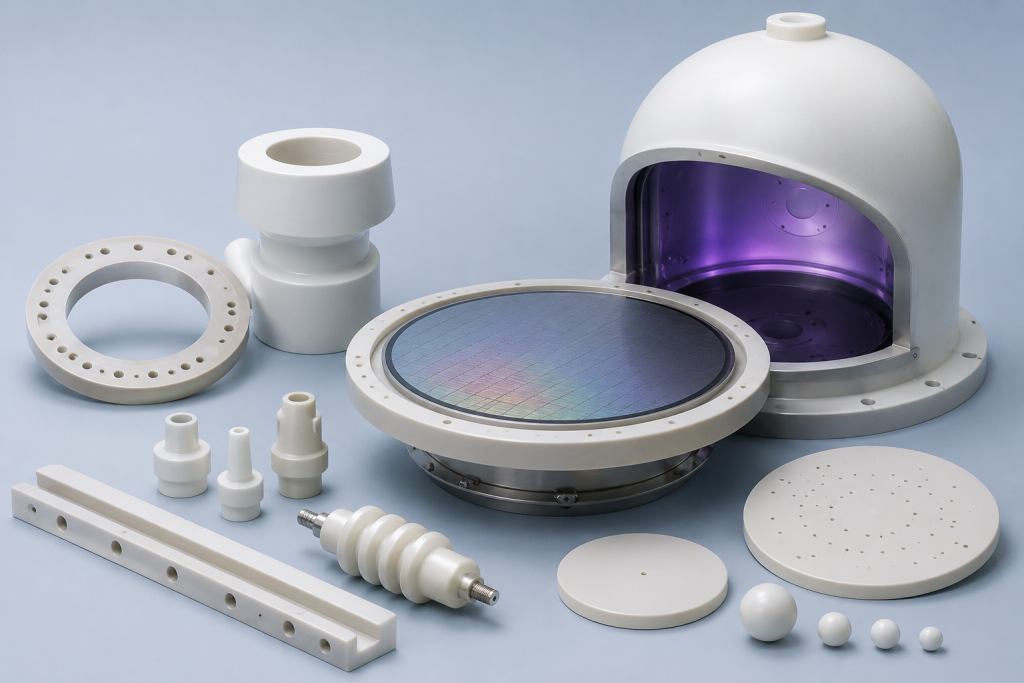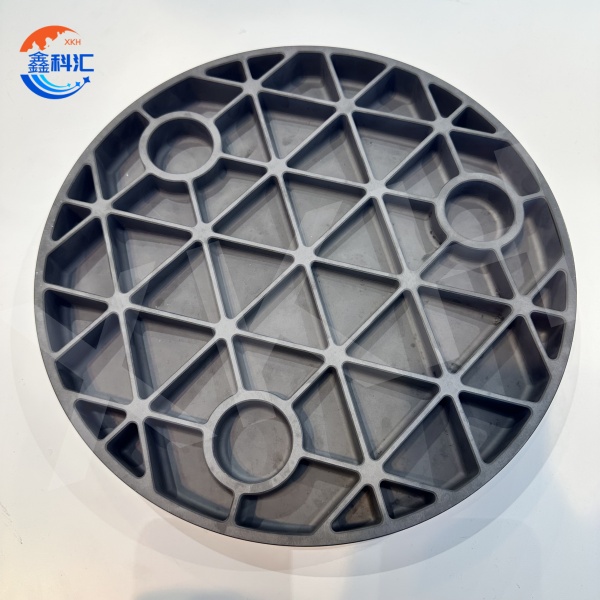
High purity zirconia parts are widely used in industries that demand exceptional wear resistance, corrosion resistance, dimensional stability, and mechanical strength. Compared with traditional metal materials and standard industrial ceramics, zirconia ceramics offer a unique combination of toughness and precision, making them suitable for advanced industrial systems.
Today, high purity zirconia components are commonly found in semiconductor manufacturing, precision machinery, medical devices, chemical processing, fluid control systems, and high-speed bearing applications.
What Are High Purity Zirconia Parts?
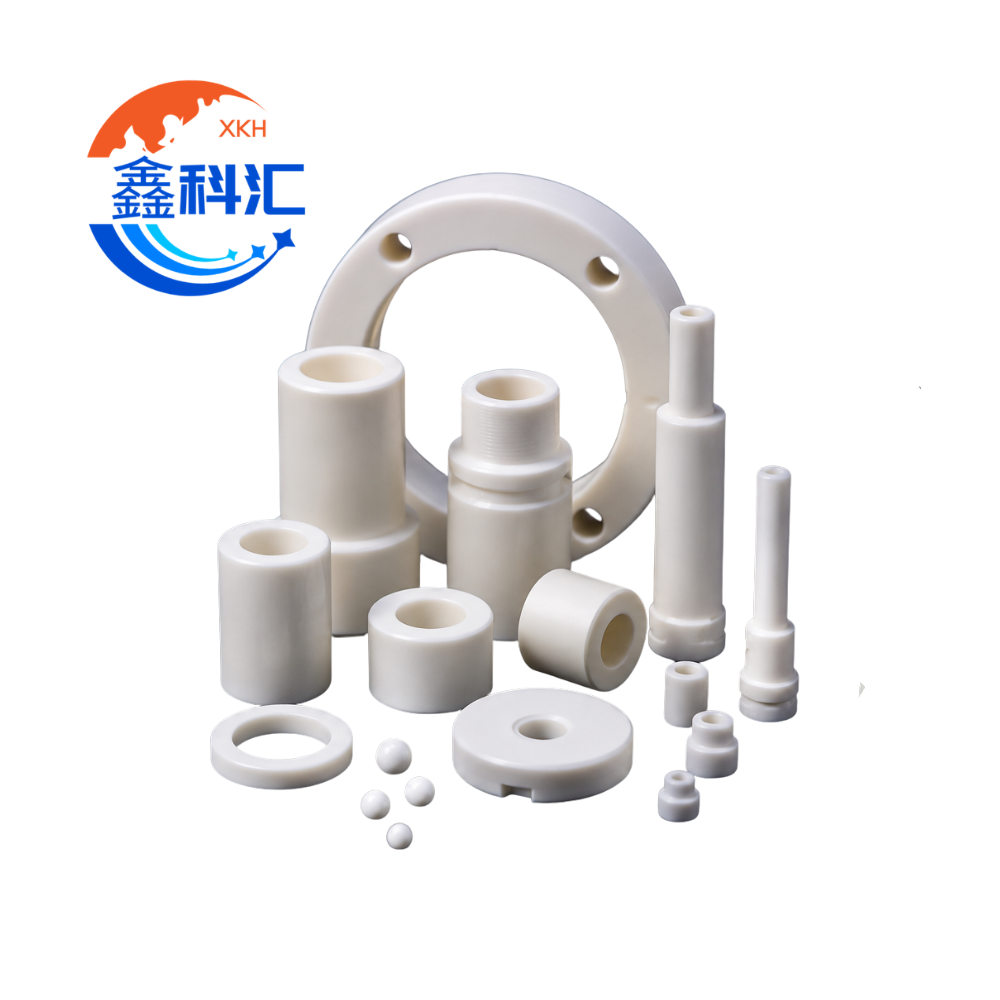
High purity zirconia parts are precision ceramic components manufactured from zirconium dioxide (ZrO₂) with controlled purity and microstructure. These ceramics are engineered to provide superior mechanical and thermal performance in demanding environments.
Depending on the application requirements, zirconia ceramics can be processed into:
- Precision ceramic shafts
- Ceramic plungers
- Zirconia nozzles
- Ceramic bearings and balls
- Semiconductor handling components
- Wear-resistant sleeves
- Customized industrial ceramic parts
Because of their excellent fracture toughness, zirconia ceramics are often considered one of the strongest advanced ceramic materials available for industrial applications.
Key Properties of Zirconia Ceramics
| Property | High Purity Zirconia |
|---|---|
| Density | 5.9–6.1 g/cm³ |
| Hardness | HV 1200–1400 |
| Flexural Strength | 900–1200 MPa |
| Fracture Toughness | 6–10 MPa·m1/2 |
| Maximum Working Temperature | Up to 1000°C |
| Thermal Conductivity | Low |
| Corrosion Resistance | Excellent |
| Electrical Insulation | Good |
These properties make zirconia particularly suitable for environments involving:
- High mechanical stress
- Abrasive wear
- Chemical exposure
- Precision motion systems
- Semiconductor cleanroom processes
Advantages of High Purity Zirconia Parts
Excellent Wear Resistance
Zirconia ceramics maintain dimensional stability even under continuous friction and abrasive operating conditions. This significantly extends component service life compared with metals and plastics.
Superior Fracture Toughness
Unlike many traditional ceramics, zirconia exhibits relatively high toughness, reducing the risk of cracking or catastrophic failure during operation.
Corrosion and Chemical Resistance
High purity zirconia parts can withstand acids, alkalis, solvents, and aggressive chemicals used in industrial processing systems.
Precision Machining Capability
Advanced processing technologies allow zirconia components to achieve:
- Tight dimensional tolerances
- Fine polished surfaces
- Complex custom geometries
- High concentricity and flatness
This is critical for semiconductor and precision equipment applications.
Electrical Insulation Performance
Zirconia ceramics provide reliable electrical insulation while maintaining excellent mechanical properties.
Industrial Applications of Zirconia Components
Semiconductor Industry
In semiconductor manufacturing, zirconia parts are used in:
- Wafer handling systems
- Precision positioning components
- Vacuum environment assemblies
- Insulating structures
- Semiconductor processing equipment
Their low contamination characteristics make them suitable for cleanroom environments.
Precision Bearings and Ceramic Balls
Zirconia ceramic balls are increasingly used in:
- High-speed bearings
- Corrosion-resistant bearing systems
- Medical equipment
- Aerospace mechanisms
- Extreme environment machinery
Compared with steel balls, zirconia balls offer:
- Lower weight
- Higher hardness
- Better corrosion resistance
- Reduced lubrication requirements
Chemical Processing Equipment
Zirconia components are commonly applied in:
- Pumps
- Valves
- Seals
- Fluid control systems
- Dosing equipment
Their resistance to chemical attack helps improve operational reliability and reduce maintenance costs.
Medical and Advanced Engineering Systems
Due to their biocompatibility and mechanical reliability, zirconia ceramics are also used in:
- Medical implants
- Dental systems
- Precision instruments
- Laboratory equipment
Custom Zirconia Parts Manufacturing
Modern ceramic manufacturing technologies support highly customized zirconia components based on customer requirements.
Custom options may include:
- Complex structural designs
- Ultra-fine polishing
- Tight tolerance machining
- Special surface finishing
- Precision grinding
- High purity material selection
Manufacturing processes typically involve:
- Powder preparation
- Forming and shaping
- High-temperature sintering
- CNC precision machining
- Surface finishing and inspection
Zirconia vs Alumina Ceramics
| Feature | Zirconia | Alumina |
| Toughness | Higher | Lower |
| Hardness | Slightly lower | Higher |
| Wear Resistance | Excellent | Excellent |
| Cost | Higher | Lower |
| Precision Applications | Better | Good |
| Impact Resistance | Superior | Moderate |
Zirconia is generally preferred for applications requiring higher toughness and mechanical reliability.
Conclusion
High purity zirconia parts have become an important material solution for modern precision industries. Their outstanding combination of strength, wear resistance, corrosion resistance, and dimensional stability makes them ideal for semiconductor systems, precision machinery, bearings, and demanding industrial environments.
As industrial equipment continues to evolve toward higher precision and reliability, custom zirconia ceramic components are expected to play an increasingly important role in advanced manufacturing and engineering applications.
FAQ
What are the advantages of high purity zirconia parts compared with metal components?
High purity zirconia parts offer superior wear resistance, corrosion resistance, and electrical insulation compared with traditional metal materials. They also provide better dimensional stability in high-temperature and chemically aggressive environments, making them ideal for semiconductor, chemical processing, and precision industrial applications.
Can zirconia ceramic components be customized for specific industrial applications?
Yes. Zirconia ceramic parts can be customized in terms of size, shape, tolerance, surface finish, and purity level. Advanced machining and precision grinding technologies allow manufacturers to produce complex zirconia components for semiconductor equipment, bearings, pumps, valves, and other high-precision systems.
Are zirconia ceramics suitable for semiconductor manufacturing environments?
Yes. High purity zirconia ceramics are widely used in semiconductor manufacturing because of their low contamination characteristics, excellent mechanical strength, and chemical resistance. They are suitable for wafer handling systems, insulating structures, vacuum equipment, and other cleanroom-compatible semiconductor applications.