1. Introduction
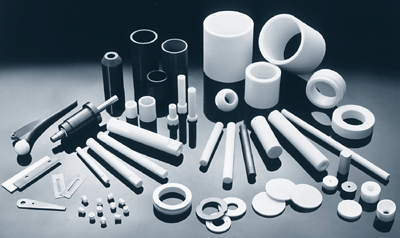
Functional ceramics are a class of inorganic, non-metallic materials designed not only for structural integrity but also for specific physical, chemical, electrical, optical, or thermal functions. Unlike traditional ceramics used mainly for bricks, tiles, or sanitary ware, functional ceramics are engineered at the microstructural level to deliver targeted performance in advanced technologies.
They play a critical role in modern industries such as electronics, aerospace, energy systems, optics, and semiconductor manufacturing, where conventional metals or polymers cannot meet extreme operating conditions.
2. Definition and Classification
Functional ceramics can be broadly defined as ceramic materials whose primary value lies in their functional properties rather than mechanical strength alone.
They are commonly classified into the following categories:
2.1 Electrical Functional Ceramics
These ceramics exhibit controlled electrical behavior such as conductivity, insulation, or semiconductivity.
- Dielectric ceramics (e.g., BaTiO₃)
- Semiconducting ceramics (e.g., SiC-based materials)
- Piezoelectric ceramics (e.g., PZT)
Applications include capacitors, sensors, actuators, and RF devices.
2.2 Thermal Functional Ceramics
These materials are designed for heat resistance, thermal conduction, or thermal insulation.
Common examples include:
- Alumina ceramics (Al₂O₃)
- Silicon carbide (SiC)
- Aluminum nitride (AlN)
They are widely used in heat sinks, furnace components, and high-temperature substrates.
2.3 Optical Functional Ceramics
Optical ceramics are transparent or semi-transparent materials used for controlling light transmission.
Key materials:
- Sapphire (single-crystal Al₂O₃)
- Zinc selenide (ZnSe)
- Spinel ceramics (MgAl₂O₄)
These materials are used in:
- Laser windows
- Infrared imaging systems
- Optical sensors
2.4 Chemical and Corrosion-Resistant Ceramics
These ceramics resist aggressive chemical environments, including acids, alkalis, and plasma exposure.
Typical materials:
- Zirconia (ZrO₂)
- Silicon carbide (SiC)
- High-purity alumina
Applications include chemical reactors, sealing components, and semiconductor processing tools.
3. Key Materials and Their Functional Mechanisms
3.1 Alumina (Al₂O₃)
Alumina ceramics are among the most widely used functional ceramics due to their:
- High electrical insulation
- Excellent thermal stability
- Strong wear resistance
They are commonly used in electronic substrates and thermal management systems.
3.2 Zirconia (ZrO₂)
Zirconia is known for its:
- Transformation toughening mechanism
- High fracture toughness compared to other ceramics
This makes it ideal for precision components, cutting tools, and biomedical implants.
3.3 Silicon Carbide (SiC)
Silicon carbide combines:
- High thermal conductivity
- Extreme hardness
- Chemical inertness
It is widely used in high-power electronics, furnace components, and semiconductor wafer handling systems.
3.4 Sapphire (Single-Crystal Al₂O₃)
Sapphire is a transparent functional ceramic with:
- High optical clarity
- Exceptional hardness (Mohs 9)
- High temperature resistance
It is used in optical windows, watch crystals, and semiconductor inspection systems.
4. Structure–Property Relationship
The functionality of ceramics is strongly governed by their microstructure, including grain size, porosity, phase composition, and crystal defects.
A simplified relationship can be expressed as:
- Electrical properties ← controlled by defect chemistry and doping
- Thermal properties ← influenced by phonon scattering at grain boundaries
- Mechanical properties ← determined by crack propagation behavior
- Optical properties ← dependent on transparency and scattering centers
This structure–property relationship is the foundation of modern ceramic engineering.
5. Manufacturing and Processing Technologies
Functional ceramics require advanced processing techniques, such as:
- Powder synthesis and purification
- Hot pressing and sintering
- Chemical vapor deposition (CVD)
- Precision machining and laser processing
For high-end applications (e.g., semiconductor equipment), dimensional tolerances often reach the micron or sub-micron level, requiring ultra-precision finishing.
6. Application Fields
6.1 Electronics and Semiconductors
- Substrates for integrated circuits
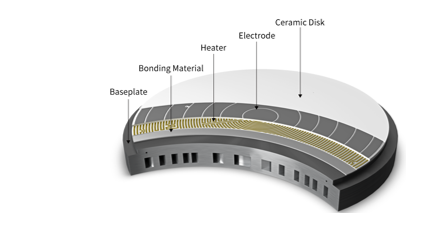
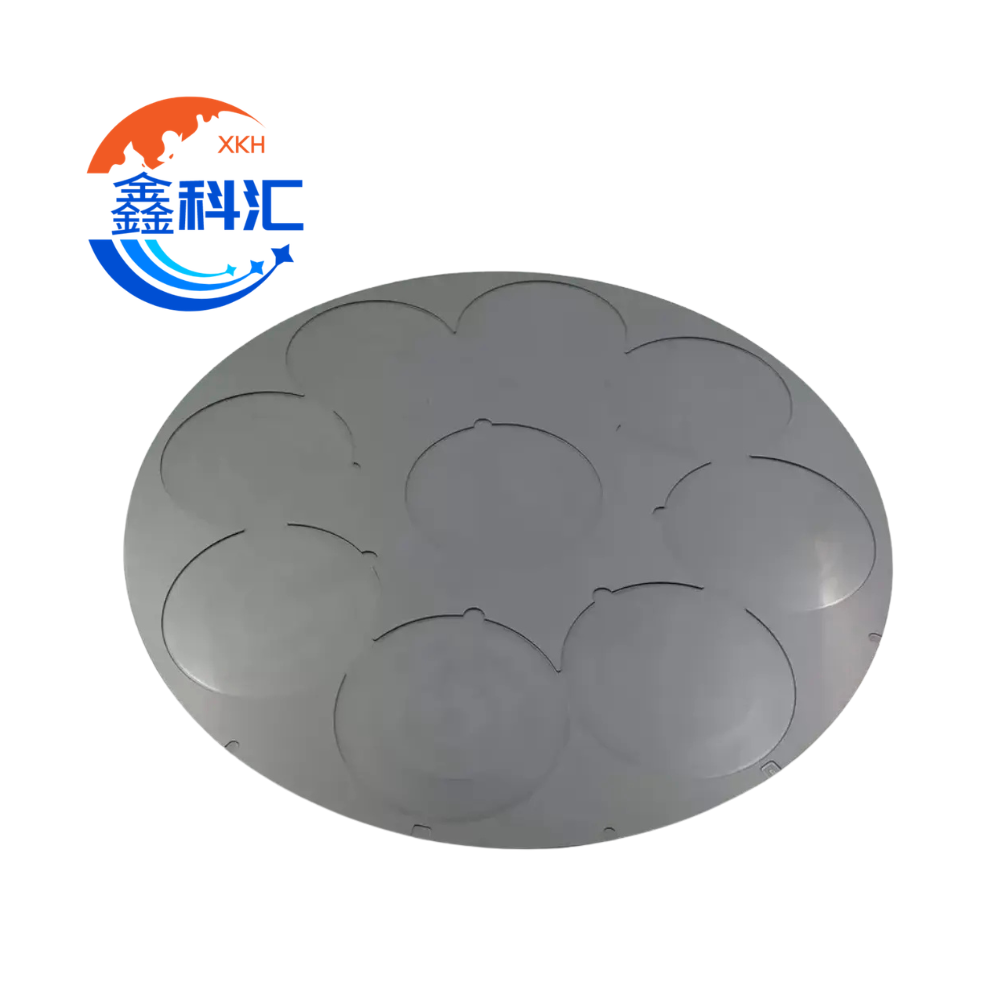
- Wafer carriers and chucks
- High-frequency communication components
6.2 Energy Systems
- Solid oxide fuel cells (SOFC)
- Battery separators
- High-temperature insulation
6.3 Aerospace and Defense
- Thermal protection systems
- Radar-transparent windows
- High-speed wear components
6.4 Optical Engineering
- Laser systems
- Infrared imaging windows
- High-durability optical sensors
7. Current Research Trends
Modern research in functional ceramics focuses on:
- Nanostructured ceramics for enhanced performance
- Multi-functional integration (e.g., thermal + electrical + mechanical)
- Additive manufacturing (3D printing of ceramics)
- Ultra-high purity materials for semiconductor applications
A key direction is the development of ceramics with tunable properties, enabling on-demand performance for specific industrial environments.
8. Conclusion
Functional ceramics represent a cornerstone of advanced material science. Their ability to operate under extreme electrical, thermal, chemical, and optical conditions makes them indispensable in next-generation technologies.
As industries continue to demand higher precision, efficiency, and durability, functional ceramics will remain a critical enabling material for innovation across electronics, energy, aerospace, and photonics.