Advanced ceramic materials have become increasingly important in industries that demand exceptional durability, chemical stability, and long service life. Among these materials, silicon carbide (SiC) ceramics have gained widespread recognition for their outstanding wear resistance and corrosion resistance. As a result, silicon carbide components are widely used in semiconductor manufacturing, chemical processing, energy production, mining, aerospace, and mechanical engineering.
The superior performance of silicon carbide ceramics is not merely the result of high hardness. Instead, it arises from a unique combination of crystal structure, strong atomic bonding, low porosity, and excellent chemical inertness. Understanding these characteristics helps explain why silicon carbide remains one of the most reliable engineering materials in harsh operating environments.

Crystal Structure and Material Characteristics
Silicon carbide is a compound ceramic composed of silicon and carbon atoms arranged in a highly ordered crystal lattice. The atoms are connected by strong covalent bonds, which are among the strongest chemical bonds found in engineering materials.
This bonding structure provides several important advantages:
- Extremely high hardness
- High elastic modulus
- Excellent thermal stability
- Low thermal expansion
- Outstanding chemical inertness
The hardness of silicon carbide typically reaches approximately 25–30 GPa, making it one of the hardest engineering ceramics available and second only to materials such as diamond and cubic boron nitride.
Typical Properties of Silicon Carbide Ceramics
| Property | Typical Value |
|---|---|
| Density | 3.1–3.2 g/cm³ |
| Hardness (Vickers) | 2500–3000 HV |
| Elastic Modulus | 380–450 GPa |
| Thermal Conductivity | 120–270 W/m·K |
| Maximum Service Temperature (Air) | Up to 1600°C |
| Corrosion Resistance | Excellent |
| Wear Resistance | Excellent |
These properties provide the foundation for the exceptional wear and corrosion performance observed in industrial applications.
Why Silicon Carbide Exhibits Superior Wear Resistance
High Hardness Reduces Surface Damage
Wear occurs when surfaces repeatedly interact under mechanical loads, resulting in material removal over time. Because silicon carbide possesses extremely high hardness, abrasive particles find it difficult to penetrate or scratch the surface.
In abrasive wear environments such as slurry pumps, seals, bearings, and valve components, silicon carbide surfaces maintain their integrity significantly longer than metals and many conventional ceramics.
The high hardness minimizes:
- Surface scratching
- Material deformation
- Particle embedding
- Progressive erosion
As a result, equipment experiences lower maintenance requirements and longer operational lifetimes.
Strong Covalent Bonding Prevents Material Removal
Wear resistance is influenced not only by hardness but also by the strength of atomic bonding within the material.
The strong covalent bonds in silicon carbide require substantial energy to break. During friction and contact loading, the crystal lattice remains stable, reducing the likelihood of micro-fracture and material detachment.
This characteristic is particularly important in applications involving:
- Mechanical seals
- Bearing systems
- Semiconductor handling components
- High-speed rotating equipment
Low Friction and Excellent Surface Finish
Advanced manufacturing technologies allow silicon carbide ceramics to achieve highly polished surfaces with extremely low roughness values.
A smoother surface reduces friction between contacting components, which decreases wear rates and minimizes heat generation during operation.
This combination of hardness and low friction contributes significantly to the long-term reliability of silicon carbide components.
Why Silicon Carbide Offers Outstanding Corrosion Resistance
Chemical Inertness in Aggressive Environments
One of the most remarkable properties of silicon carbide is its resistance to chemical attack.
Unlike many metals, silicon carbide does not readily react with acids, alkalis, salts, or organic solvents under normal operating conditions. Its strong silicon-carbon bonds create a highly stable structure that remains largely unaffected by corrosive media.
Silicon carbide demonstrates excellent resistance to:
- Sulfuric acid
- Hydrochloric acid
- Nitric acid
- Organic chemicals
- Industrial solvents
- Salt-containing environments
This chemical stability makes SiC an ideal material for chemical processing systems and semiconductor manufacturing equipment.
Protective Silicon Oxide Layer
When exposed to oxygen at elevated temperatures, silicon carbide forms a thin and dense silicon dioxide (SiO₂) layer on its surface.
This oxide layer acts as a protective barrier that slows further oxidation and prevents rapid degradation of the underlying material.
The oxidation reaction can be simplified as:
SiC + O₂ → SiO₂ + CO₂
The resulting oxide film is highly stable and contributes to the material’s excellent high-temperature corrosion resistance.
Resistance to Electrochemical Corrosion
Metals often suffer from electrochemical corrosion due to galvanic reactions and environmental exposure. Silicon carbide, however, is a ceramic material and therefore does not experience conventional electrochemical corrosion mechanisms.
As a result, SiC components maintain their performance even in humid, chemically aggressive, or electrically active environments where metallic materials may rapidly degrade.
Comparison with Other Engineering Materials
| Material | Wear Resistance | Corrosion Resistance | High-Temperature Stability |
| Stainless Steel | Moderate | Good | Moderate |
| Alumina Ceramic | High | Excellent | High |
| Zirconia Ceramic | High | Excellent | Moderate |
| Silicon Carbide Ceramic | Outstanding | Outstanding | Outstanding |
Compared with metallic materials, silicon carbide offers significantly longer service life in abrasive and corrosive environments. Compared with many traditional ceramics, it provides a better balance between wear resistance, thermal conductivity, and high-temperature stability.
Industrial Applications
Semiconductor Manufacturing
Silicon carbide is widely used in semiconductor processing equipment, including:
- Wafer boats
- Wafer carriers
- Focus rings
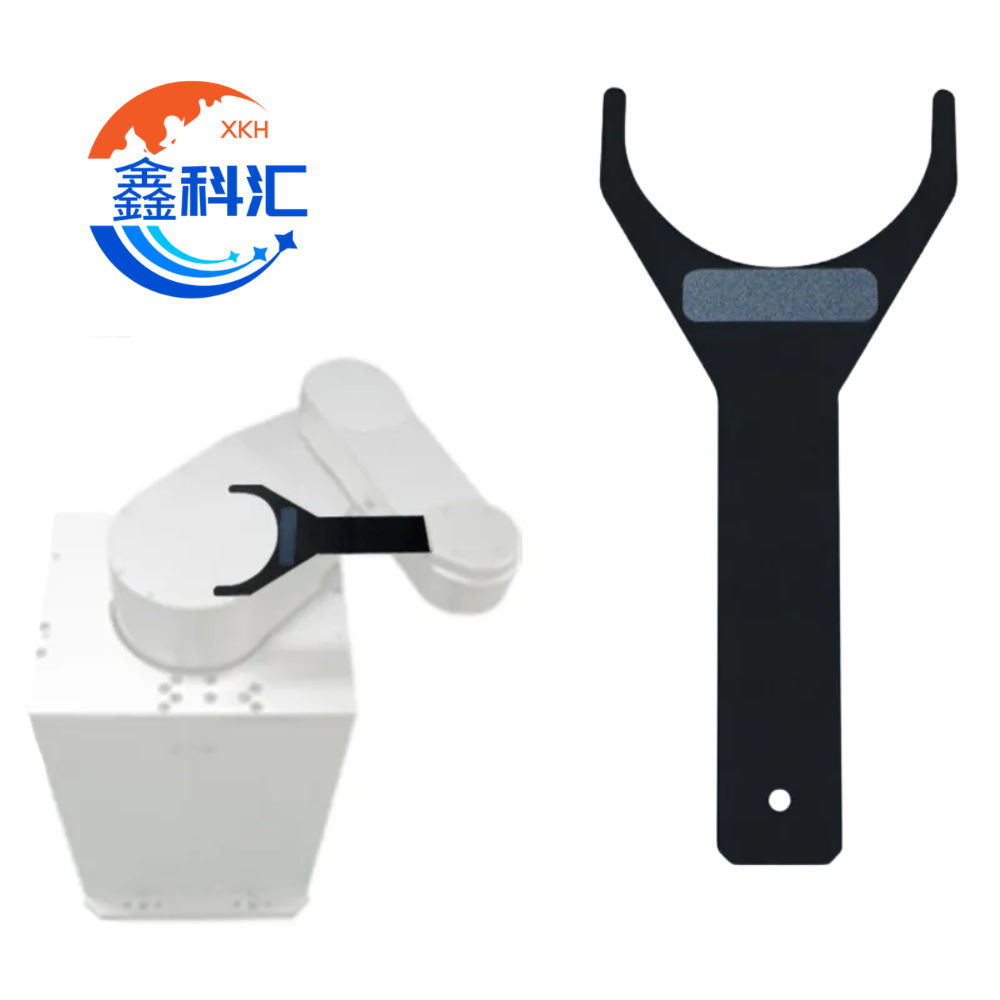
- End effectors
- Process chamber components
Its resistance to plasma erosion, high temperatures, and corrosive process gases makes it highly suitable for advanced semiconductor fabrication.
Chemical Processing Industry
In chemical plants, silicon carbide components are commonly found in:
- Mechanical seals
- Pump components
- Heat exchangers
- Reaction vessels
Their ability to withstand aggressive chemicals significantly reduces maintenance costs and downtime.
Mining and Energy Industries
In highly abrasive environments such as mining and power generation, silicon carbide is used for:
- Wear liners
- Nozzles
- Cyclone components
- Slurry handling systems
Its exceptional wear resistance helps extend equipment life under severe operating conditions.
Future Outlook
As industries continue to move toward higher efficiency, higher temperatures, and more aggressive processing environments, the demand for advanced ceramic materials is expected to grow rapidly.
Silicon carbide ceramics are particularly well positioned to benefit from developments in:
- Semiconductor manufacturing
- Electric vehicles
- Renewable energy systems
- Aerospace engineering
- Advanced chemical processing
Continuous improvements in manufacturing technology are also making high-performance silicon carbide components more accessible and cost-effective.
Conclusion
The superior wear and corrosion resistance of silicon carbide ceramics originates from their unique combination of high hardness, strong covalent bonding, low porosity, and exceptional chemical stability. These characteristics enable silicon carbide to outperform many metals and traditional ceramics in demanding industrial environments.
As modern industries increasingly require materials capable of operating under extreme conditions, silicon carbide ceramics will continue to play a critical role in improving equipment reliability, extending service life, and reducing maintenance costs across a wide range of applications.
FAQ
Why is silicon carbide more wear-resistant than most metals?
Silicon carbide possesses significantly higher hardness and stronger atomic bonding than most metallic materials, making it far more resistant to abrasion, scratching, and surface degradation.
Can silicon carbide resist strong acids and alkalis?
Yes. Silicon carbide exhibits excellent chemical stability and can withstand many acids, alkalis, salts, and industrial chemicals, making it suitable for corrosive environments.
What industries commonly use silicon carbide ceramics?
Silicon carbide ceramics are widely used in semiconductor manufacturing, chemical processing, mining, energy production, aerospace, and other industries requiring high wear and corrosion resistance.