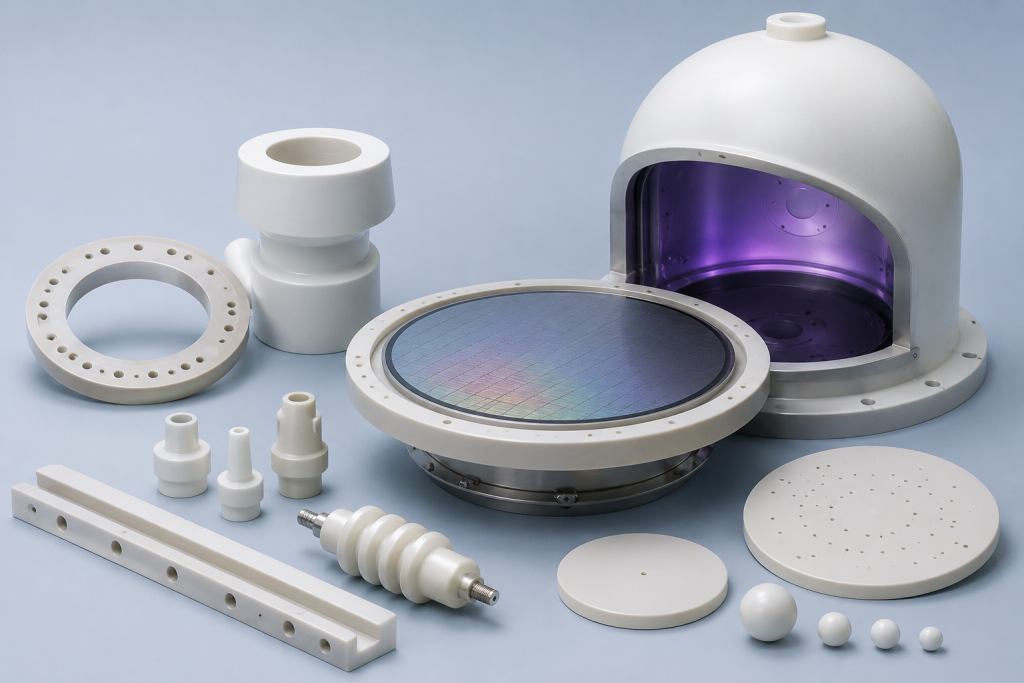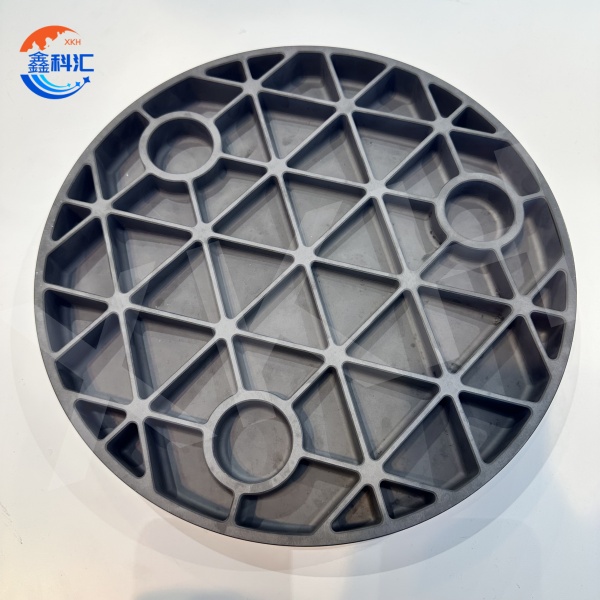
As semiconductor and optoelectronic technologies continue to advance toward higher power, greater integration, and improved reliability, the demand for high-performance materials is growing rapidly. Among the many advanced materials used in modern optoelectronic devices, ceramic materials have emerged as a critical enabling technology due to their exceptional thermal stability, chemical resistance, electrical insulation, and optical properties.
From semiconductor lasers and photovoltaic cells to optical sensors and advanced packaging, ceramic materials play an increasingly important role in improving device performance, extending operational lifetime, and enabling next-generation photonic technologies.
This article explores the key properties of ceramic materials, their applications in semiconductor optoelectronics, and future development trends shaping the industry.
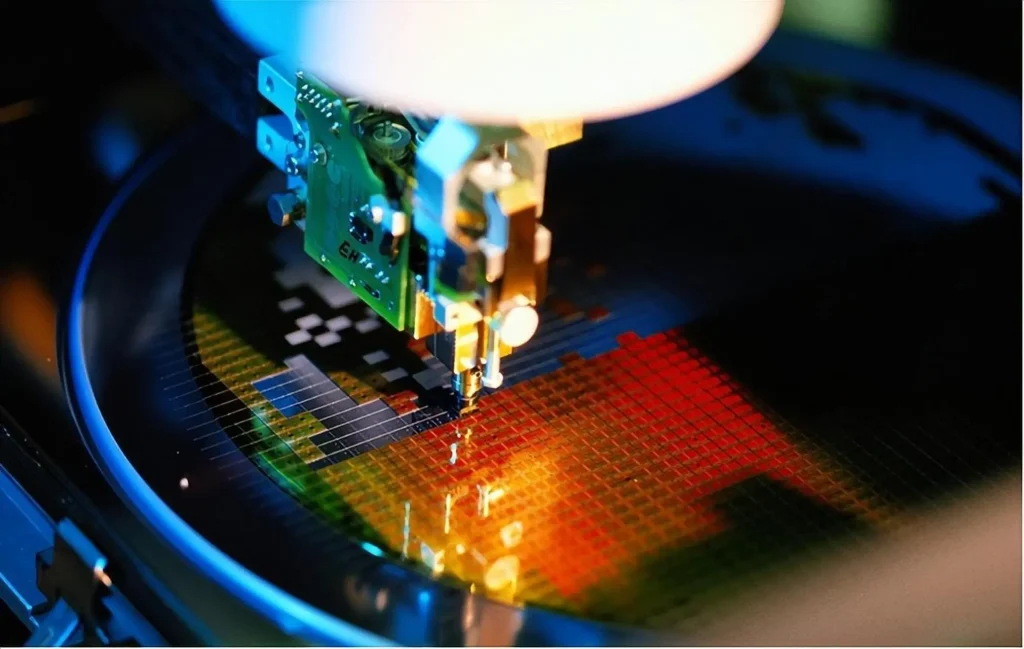
Why Ceramic Materials Matter in Semiconductor Optoelectronics
Semiconductor optoelectronic devices often operate under demanding conditions, including:
- อุณหภูมิสูง
- Intense optical radiation
- Corrosive chemical environments
- High voltages and electric fields
- Frequent thermal cycling
Traditional materials may suffer from thermal deformation, corrosion, or performance degradation under such conditions. Advanced ceramics offer a unique combination of properties that help overcome these challenges.
Key Advantages of Ceramic Materials
ความเสถียรทางความร้อนที่ยอดเยี่ยม
Many technical ceramics maintain their structural integrity and functional performance at temperatures exceeding 1000°C. This makes them suitable for high-power laser systems, semiconductor processing equipment, and harsh-environment sensors.
ทนต่อสารเคมีได้เหนือกว่า
Ceramics exhibit exceptional resistance to acids, alkalis, plasma environments, and reactive gases commonly used in semiconductor manufacturing processes.
High Electrical Insulation
Materials such as alumina and aluminum nitride provide excellent electrical insulation while maintaining thermal conductivity, making them ideal for electronic packaging and optoelectronic modules.
Outstanding Optical Properties
Certain advanced ceramics offer:
- High optical transparency
- Wide transmission windows
- Low optical absorption
- Excellent laser damage resistance
These characteristics are highly valuable for optical and photonic applications.
ความแข็งแรงเชิงกลและความต้านทานการสึกหรอ
Ceramics possess high hardness and excellent dimensional stability, allowing long-term operation in demanding industrial environments.
Common Ceramic Materials Used in Optoelectronics
อะลูมินา (Al₂O₃)
Alumina is one of the most widely used engineering ceramics due to its:
- High insulation resistance
- ความแข็งแรงทางกลที่ดี
- ความเสถียรทางเคมีที่ยอดเยี่ยม
- Cost-effectiveness
การใช้งานทั่วไปประกอบด้วย:
- แผ่นรองรับอิเล็กทรอนิกส์
- Sensor components
- บรรจุภัณฑ์ LED
อะลูมิเนียมไนไตรด์ (AlN)
อะลูมิเนียมไนไตรด์รวม:
- การนำความร้อนสูง
- ค่าคงตัวไดอิเล็กทริกต่ำ
- ฉนวนไฟฟ้าที่ยอดเยี่ยม
การใช้งานประกอบด้วย:
- High-power LED packages
- Laser diode heat spreaders
- อุปกรณ์ความถี่วิทยุและไมโครเวฟ
ซิลิคอนไนไตรด์ (Si₃N₄)
Silicon nitride offers:
- ความเหนียวต่อการแตกหักสูง
- ทนต่อความร้อนและเย็นได้อย่างยอดเยี่ยม
- ความทนทานต่อการสึกหรอที่เหนือกว่า
Common uses include:
- ส่วนประกอบอุปกรณ์เซมิคอนดักเตอร์
- ลูกปืนความแม่นยำสูง
- Structural optical parts
ซิลิคอนคาร์ไบด์ (SiC)
Silicon carbide ceramics provide:
- การนำความร้อนสูงมาก
- ความแข็งพิเศษ
- ทนต่อการกัดกร่อนได้อย่างยอดเยี่ยม
การใช้งานประกอบด้วย:
- อุปกรณ์การประมวลผลเซมิคอนดักเตอร์
- Optical mirrors
- High-temperature optoelectronic systems
เซรามิกโปร่งใส
Advanced transparent ceramics such as:
- YAG (Yttrium Aluminum Garnet)
- Spinel
- อะลูมินาโปร่งใส
are increasingly used in laser and photonic applications due to their optical transparency and mechanical durability.
Ceramic Materials in Semiconductor Laser Systems
Thermal Management of High-Power Lasers
Heat generation is one of the major limitations affecting semiconductor laser performance.
Ceramic materials with high thermal conductivity efficiently dissipate heat generated during operation, reducing:
- Thermal lensing effects
- Beam distortion
- Device degradation
สิ่งนี้ช่วยปรับปรุง:
- Output power stability
- Beam quality
- Device lifetime
Transparent Laser Ceramics
Transparent ceramics have become attractive alternatives to single crystals in solid-state laser systems.
ข้อดี ได้แก่:
- Large-scale manufacturing capability
- Uniform optical properties
- Lower production costs
- Flexible dopant distribution
YAG ceramic lasers are widely used in:
- Industrial cutting
- Medical treatment systems
- Defense applications
- Scientific research
Multi-Wavelength Laser Development
By engineering ceramic compositions and energy-level structures, researchers can develop laser materials capable of emitting multiple wavelengths.
These systems support applications such as:
- Optical communications
- Spectroscopy
- Biomedical imaging
- Precision manufacturing
Ceramic Materials in Photovoltaic Technology
As solar energy adoption accelerates worldwide, improving photovoltaic efficiency and durability remains a major focus.
Enhancing Conversion Efficiency
Advanced ceramic coatings and layers contribute to:
- Improved light absorption
- Reduced optical losses
- Enhanced charge transport
As a result, solar cells can achieve higher energy conversion efficiencies.
Protective Coatings
Ceramic coatings provide robust environmental protection against:
- UV radiation
- ความชื้น
- Temperature fluctuations
- การปนเปื้อนทางเคมี
These protective layers significantly increase module reliability and operational lifespan.
Thermal Stability in Harsh Environments
Solar systems deployed in deserts, offshore installations, and industrial environments benefit from ceramic materials that maintain performance under extreme temperatures and harsh weather conditions.
Ceramic Materials in Optical Sensors
Optical sensors are widely used in:
- Medical diagnostics
- Environmental monitoring
- Industrial automation
- Aerospace systems
Ceramic materials have become important components in modern sensor design.
Improved Sensitivity
Specialized ceramic materials can be engineered to respond efficiently to specific wavelengths.
This enables:
- Higher signal detection accuracy
- Improved sensitivity
- Faster response times
Wider Detection Range
Transparent ceramic materials exhibit broad optical transmission windows, allowing sensors to detect radiation across:
- Ultraviolet (UV)
- Visible
- Near-infrared (NIR)
- Mid-infrared (MIR)
spectral regions.
Long-Term Reliability
Ceramic-based sensors maintain stable performance in environments characterized by:
- High humidity
- ก๊าซกัดกร่อน
- อุณหภูมิสูง
- Radiation exposure
making them suitable for mission-critical applications.
Emerging Applications in Semiconductor Packaging
Advanced semiconductor packaging increasingly relies on ceramic materials for:
- Substrates
- อินเตอร์โพเซอร์
- แผ่นกระจายความร้อน
- Hermetic packages
Particularly in:
- อิเล็กทรอนิกส์กำลัง
- Photonic integrated circuits (PICs)
- High-frequency communication modules
- AI computing hardware
materials such as aluminum nitride and silicon nitride provide excellent thermal and electrical performance.
Future Development Trends
Novel Ceramic Material Design
Researchers are developing advanced ceramic systems with:
- Tailored optical properties
- การนำความร้อนที่สูงขึ้น
- Enhanced transparency
- Improved mechanical toughness
These materials are expected to unlock new optoelectronic device architectures.
Nanostructured Ceramics
Nanotechnology enables precise control over ceramic microstructures, leading to:
- Better optical performance
- Higher efficiency
- Reduced defects
- Improved device reliability
Multifunctional Integrated Devices
Future optoelectronic systems will increasingly require materials capable of simultaneously providing:
- Optical transmission
- การจัดการความร้อน
- ฉนวนไฟฟ้า
- Structural support
Advanced ceramics are uniquely positioned to meet these requirements.
Advanced Manufacturing Technologies
Emerging production methods such as:
- Additive manufacturing (3D printing)
- Spark plasma sintering (SPS)
- Precision ceramic machining
will enable more complex geometries and lower production costs.
สรุป
Ceramic materials have become indispensable in modern semiconductor optoelectronics. Their exceptional thermal stability, corrosion resistance, electrical insulation, mechanical strength, and optical performance make them ideal for applications ranging from semiconductor lasers and photovoltaic cells to optical sensors and advanced packaging systems.
As material science continues to evolve, innovations in transparent ceramics, nanostructured materials, and multifunctional ceramic components are expected to drive the next generation of semiconductor and photonic technologies. With increasing demands for higher performance, reliability, and efficiency, advanced ceramic materials will remain a cornerstone of future optoelectronic innovation.