Semiconductor manufacturing requires materials that can operate reliably under high temperature, plasma exposure, chemical corrosion, vacuum conditions and strict cleanliness requirements. In many process tools, metal and plastic components cannot meet these demanding conditions. This is why cerâmica estrutural are widely used in semiconductor equipment.
Structural ceramics are advanced ceramic materials designed to provide mechanical strength, dimensional stability, wear resistance, insulation and chemical resistance. In semiconductor manufacturing, they are used not only as supporting parts, but also as precision components that directly influence wafer handling, process stability and contamination control.
What Are Structural Ceramics?
Structural ceramics are ceramic materials used for load-bearing, positioning, supporting, insulating and protective functions. Unlike traditional ceramics, advanced structural ceramics are engineered for high-performance industrial environments.
In semiconductor equipment, structural ceramics are often used in components that require:
- Elevada dureza e resistência ao desgaste
- Excelente estabilidade térmica
- Baixa produção de partículas
- Good electrical insulation
- Chemical and plasma resistance
- High dimensional accuracy
- Stable performance in vacuum or cleanroom environments
Because semiconductor devices are extremely sensitive to contamination, the material purity, machining quality and surface condition of ceramic parts are very important.
Why Structural Ceramics Are Important in Semiconductor Equipment
Semiconductor manufacturing involves many harsh process environments. Components may be exposed to high temperature, corrosive gases, plasma, mechanical friction and repeated thermal cycling. If the material is not stable, it may generate particles, deform, crack or introduce contaminants.
Structural ceramics help solve these problems. Their high hardness and chemical stability allow them to maintain performance in demanding process tools. Their low wear rate helps reduce particle contamination. Their electrical insulation properties also make them suitable for high-voltage and electrostatic applications.
In wafer processing, even a small amount of contamination or mechanical instability can affect yield. Therefore, ceramic components are often selected for critical areas such as wafer handling, chamber support, insulation, positioning and sealing structures.
Common Structural Ceramic Materials Used in Semiconductor Manufacturing
Different semiconductor applications require different ceramic materials. The most common materials include alumina, zirconia, silicon carbide and aluminum nitride.
Alumina Ceramic Components
Alumina ceramic, also known as aluminum oxide or Al₂O₃ ceramic, is one of the most widely used structural ceramic materials. It offers good hardness, electrical insulation, wear resistance and cost-effectiveness.
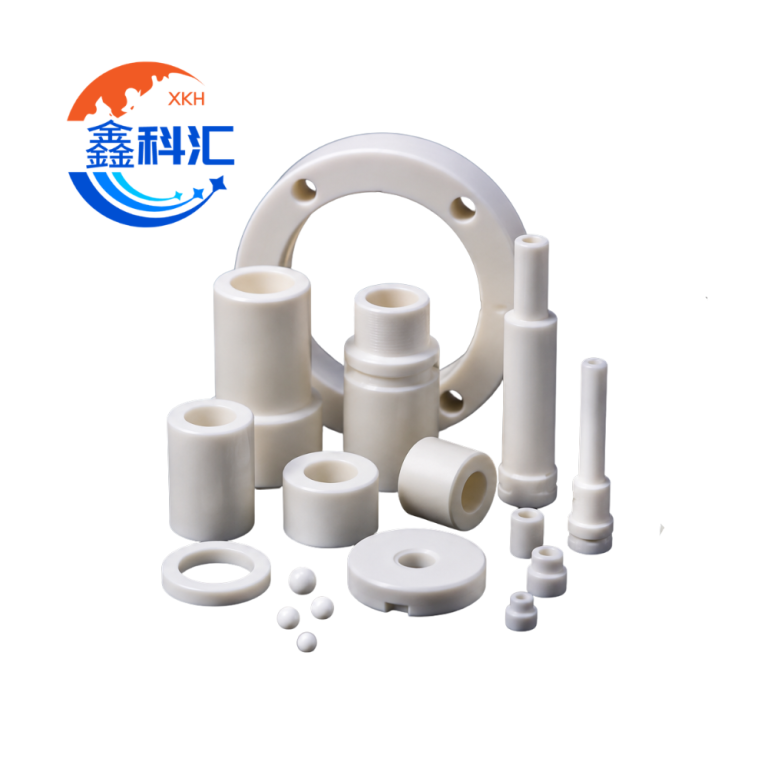
Alumina ceramic parts are commonly used in semiconductor equipment as insulating parts, support plates, ceramic rings, positioning fixtures, vacuum components and precision machined parts.
Key Advantages of Alumina Ceramic
Alumina ceramic provides excellent electrical insulation and good mechanical strength. It can withstand elevated temperatures and many chemical environments. Compared with some other advanced ceramics, alumina is also relatively economical, making it suitable for a wide range of custom ceramic components.
Aplicações típicas
Alumina ceramic is often used for:
- Isoladores cerâmicos
- Wafer support plates
- Chamber components
- Ceramic spacers and sleeves
- Vacuum feedthrough parts
- Precision positioning fixtures
- Componentes de isolamento elétrico
For applications requiring insulation, wear resistance and stable mechanical performance, alumina is often a practical choice.
Componentes cerâmicos de zircónio
Zirconia ceramic, or ZrO₂ ceramic, is known for its high strength, high fracture toughness and excellent wear resistance. Compared with alumina, zirconia usually provides better toughness and impact resistance.
In semiconductor equipment, zirconia ceramic parts are often used where mechanical durability, wear resistance and precision machining are required.
Key Advantages of Zirconia Ceramic
Zirconia offers high mechanical strength and better resistance to cracking than many other ceramic materials. It is suitable for components exposed to mechanical stress, sliding contact or repeated handling. Zirconia can also be polished to a smooth surface, which helps reduce wear and particle generation.
Aplicações típicas
Zirconia ceramic can be used for:
- Precision ceramic pins
- Ceramic guide parts
- Wear-resistant ceramic components
- Wafer handling fixtures
- Ceramic rollers
- Ceramic nozzles
- Custom precision structural parts
For applications requiring strength, toughness and wear resistance, zirconia is a strong candidate.
Componentes cerâmicos de carboneto de silício
Silicon carbide, commonly called SiC, is a high-performance ceramic material widely used in demanding semiconductor environments. It provides excellent thermal stability, high hardness, strong chemical resistance and good thermal conductivity.
SiC ceramic components are often used in high-temperature and plasma-related semiconductor processes.
Key Advantages of Silicon Carbide
SiC has excellent resistance to thermal shock and high-temperature deformation. It is also suitable for corrosive and plasma environments. Compared with alumina and zirconia, SiC usually performs better in applications requiring high thermal conductivity, high temperature resistance and long service life.
Aplicações típicas
SiC ceramic is widely used for:
- Barcos de wafer
- Suportes de bolachas
- Componentes do forno
- Process tubes and liners
- Susceptores
- Ceramic trays
- Componentes resistentes ao plasma
- High-temperature structural parts
For semiconductor processes involving heat, plasma or aggressive chemical environments, SiC is often preferred.
Aluminum Nitride Ceramic Components
Aluminum nitride, or AlN ceramic, is mainly valued for its high thermal conductivity and electrical insulation. This combination makes it important in semiconductor, power electronics and thermal management applications.
Key Advantages of Aluminum Nitride
AlN offers much higher thermal conductivity than alumina while maintaining good electrical insulation. It is suitable for applications where heat must be transferred efficiently without electrical conduction.
Aplicações típicas
AlN ceramic is commonly used for:
- Ceramic heat spreaders
- Substratos para embalagem de semicondutores
- Insulating thermal plates
- Substratos para módulos de potência
- LED and laser diode thermal components
- High-power electronic ceramic parts
For applications requiring both insulation and heat dissipation, AlN is an important material choice.
Main Applications of Structural Ceramics in Semiconductor Manufacturing
Structural ceramics are used throughout semiconductor equipment and process systems.
Componentes para manuseamento de bolachas
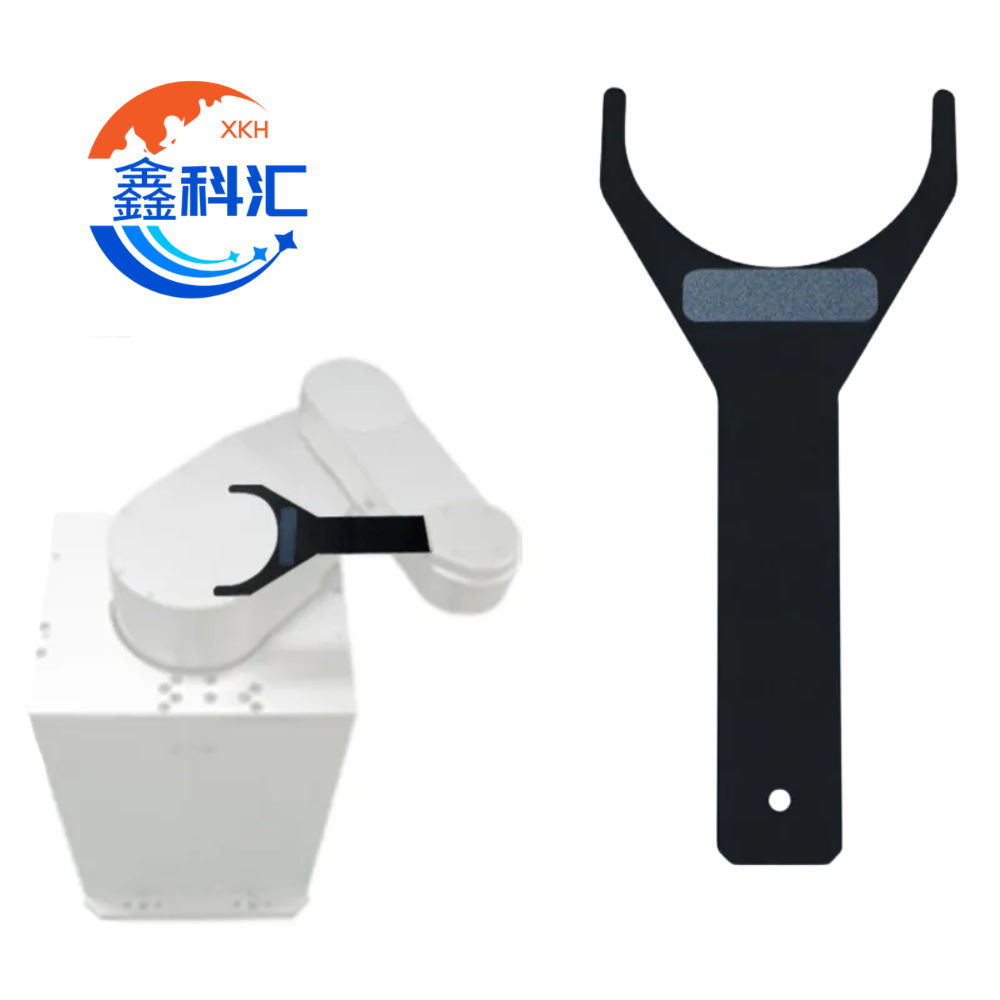
Ceramic parts are widely used in wafer handling systems because they offer low wear, high rigidity and stable dimensional accuracy. Ceramic end effectors, pins, guides and support parts help move wafers safely while reducing contamination risk.
Wafer Boats and Carriers
Wafer boats and carriers are used to hold wafers during diffusion, oxidation, annealing and other thermal processes. SiC, quartz and alumina materials may be selected depending on process temperature, cleanliness requirements and equipment design.
Chamber Components
Semiconductor process chambers often expose components to plasma, gases and temperature changes. Ceramic rings, liners, shields and support structures are used to improve stability and reduce contamination.
Insulation and Electrical Isolation Parts
Alumina and AlN ceramics are widely used for electrical insulation. These parts are important in high-voltage, RF and vacuum environments where stable insulation is required.
Vacuum and High-Temperature Fixtures
Ceramics are suitable for vacuum environments because they provide low outgassing, good dimensional stability and high temperature resistance. Ceramic spacers, tubes, plates and custom fixtures are commonly used in vacuum tools.
Precision Positioning and Support Parts
Many semiconductor tools require precise alignment and repeatable positioning. Ceramic materials are used for positioning blocks, guide rails, locating pins and support structures because of their hardness, wear resistance and dimensional stability.
How to Choose the Right Structural Ceramic Material
Selecting the correct ceramic material requires understanding the actual working environment. No single ceramic material is suitable for every application.
Choose Alumina When Insulation and Cost Control Are Important
Alumina is suitable for electrical insulation, general structural support and wear-resistant components. It is often chosen when stable performance and cost-effectiveness are both important.
Choose Zirconia When Strength and Toughness Are Required
Zirconia is suitable for precision parts exposed to mechanical stress, sliding contact or impact. It is a good option for wear-resistant and high-strength ceramic components.
Choose SiC for High Temperature and Harsh Process Conditions
SiC is recommended for high-temperature, plasma, corrosive or demanding semiconductor environments. It is commonly used for wafer boats, carriers and furnace components.
Choose AlN for Thermal Management Applications
AlN is suitable when high thermal conductivity and electrical insulation are required at the same time. It is widely used in semiconductor packaging and power electronics.
Key Specifications for Custom Structural Ceramic Parts
When ordering custom ceramic components for semiconductor equipment, buyers should confirm the following details:
- Ceramic material grade
- Purity requirement
- Drawing and dimensional tolerance
- Rugosidade da superfície
- Flatness and parallelism
- Hole size and slot design
- Temperatura de funcionamento
- Chemical or plasma exposure
- Electrical insulation requirement
- Thermal conductivity requirement
- Cleaning and packaging standard
- Quantity and delivery schedule
For precision ceramic parts, a technical drawing is highly recommended. If a drawing is not available, a sample or detailed application description can help the manufacturer evaluate the design.
Custom Machining of Semiconductor Ceramic Parts
Structural ceramic parts often require precision machining after sintering. Common machining processes include cutting, grinding, drilling, lapping, polishing and CNC machining.
Because advanced ceramics are hard and brittle, machining requires specialized equipment and process control. The manufacturer must consider material shrinkage, tolerance control, edge chipping, surface finish and inspection methods.
For semiconductor applications, machining quality is especially important because poor surface quality may increase particle generation or reduce service life.
Conclusão
Structural ceramics play an important role in semiconductor manufacturing equipment. Materials such as alumina, zirconia, silicon carbide and aluminum nitride provide the mechanical, thermal, electrical and chemical properties required for demanding wafer processing environments.
Alumina is widely used for insulation and general structural parts. Zirconia provides high strength and wear resistance. SiC is suitable for high-temperature and harsh process conditions. AlN is preferred for thermal management applications requiring both insulation and heat dissipation.
For semiconductor manufacturers and equipment engineers, choosing the right structural ceramic material can improve process stability, reduce contamination risk and extend equipment service life.