반도체, 정밀 기계, 광학 시스템과 같은 첨단 엔지니어링 산업에서 사용됩니다, 산업용 세라믹, 탄화 규소(SiC) 및 사파이어 는 종종 경쟁 자료로 비교됩니다.
그러나 이 비교를 단순한 “어느 쪽이 더 낫다”는 질문으로 취급하면 오해의 소지가 있습니다.
더 정확한 이해는
이 세 가지 자료는 다음을 나타냅니다. 세 가지 머티리얼 아키텍처, 세 가지 성능 수준이 아닙니다.
- 산업용 세라믹 → 엔지니어링 다결정 시스템
- 탄화규소 → 극한 성능의 기능성 소재
- 사파이어 → 단결정 광학 등급 소재
이들은 서로 다른 머티리얼 제품군이 아니라 서로 다른 “머티리얼 디자인 철학'에 속합니다.
1. 산업 세라믹: 엔지니어링 기초 레이어
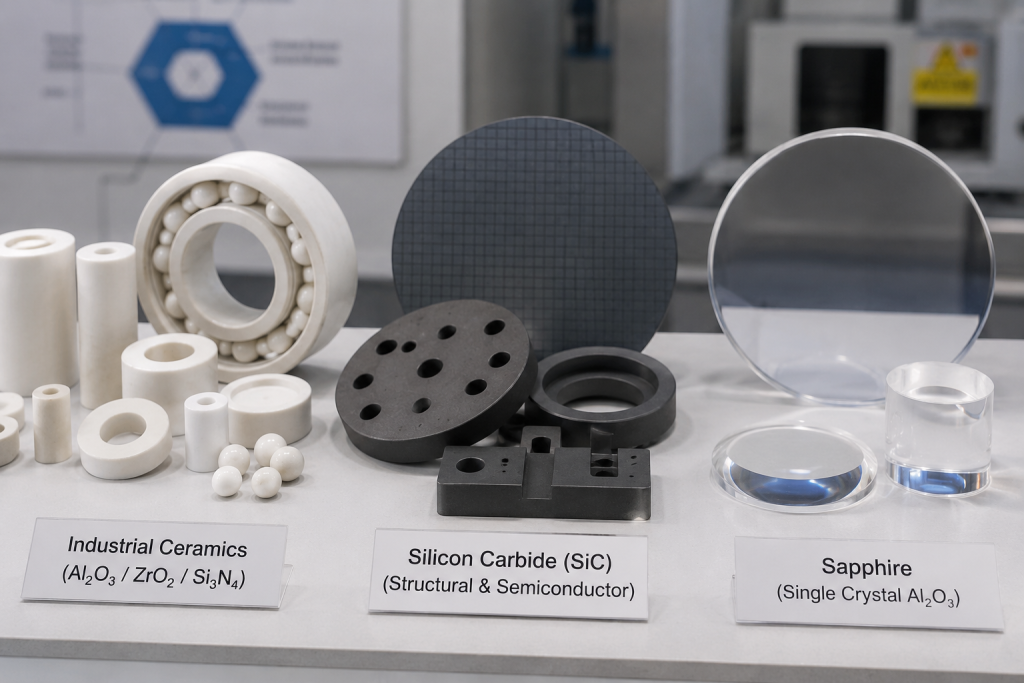
산업용 세라믹은 다음과 같은 광범위한 종류의 다결정 소재를 의미합니다:
- 알루미나 세라믹
- 지르코니아 세라믹
- 질화 규소 세라믹
- 반응 소결 SiC 세라믹
핵심 컨셉: 설계된 트레이드 오프 재료
산업용 세라믹은 극한의 성능으로 정의되는 것이 아니라:
비용, 기계 가공성, 내구성 간의 균형 잡힌 엔지니어링 최적화
일반적인 특성:
- 높은 내마모성
- 우수한 내식성
- 전기 절연
- 보통에서 높은 기계적 강도
- 상대적으로 비용 효율적
산업적 역할:
- 베어링
- 기계식 씰
- 가이드 레일
- 노즐
- 구조적 구성 요소
2. 탄화규소(SiC): 극한 환경 소재
실리콘 카바이드는 세라믹과 기능성 반도체 재료의 경계에 존재합니다.
두 가지 산업에 서비스를 제공한다는 점에서 독특합니다:
(1) 구조용 SiC(엔지니어링 부품)
사용처
- 반도체 진공 척
- 에칭 챔버 부품
- 웨이퍼 캐리어
- 고온 설비
(2) 반도체 SiC(웨이퍼 재료)
사용 용도:
- 파워 MOSFET
- 고전압 장치
- EV 전력 모듈
핵심 개념: 극한의 성능 최적화
SiC는 다음을 위해 설계되었습니다:
열, 화학 및 전기적 극한 조건
주요 이점:
- 매우 높은 열 전도성
- 매우 낮은 열팽창
- 뛰어난 플라즈마 내식성
- 높은 온도 안정성(>1000°C)
제한 사항:
- 기계 가공이 매우 어렵고 비용이 많이 듭니다.
- 생산 중 결함에 민감
3. 사파이어: 단결정 기능성 광학 소재
사파이어는 세라믹과 SiC와는 근본적으로 다릅니다.
다결정 세라믹과 달리 사파이어는 Al₂O₃ 단결정.
핵심 개념: 구조적 질서 + 광학 기능
그 가치는 기계적인 것뿐만 아니라 광학적 가치도 있습니다:
- 높은 투명도(적외선 범위에서 볼 수 있음)
- 매우 높은 경도(모스 9)
- 뛰어난 스크래치 방지
- 화학적 불활성
산업용 애플리케이션:
- 광학 창
- 적외선 센서
- 시계 유리
- LED 기판
- 보호 커버
4. 주요 매개변수 비교 표
| 속성 | 산업용 세라믹(Al₂O₃ / ZrO₂ / Si₃N₄) | 실리콘 카바이드(SiC) | 사파이어(단결정 Al₂O₃) |
|---|---|---|---|
| 재료 구조 | 다결정 | 폴리 / 단결정 | 단결정 |
| 밀도(g/cm³) | 3.2-6.0 | 3.1-3.2 | 3.98 |
| 경도(Mohs) | 7-9 | 9-9.5 | 9 |
| 굴곡 강도(MPa) | 300-1200 | 300-600(엔지니어링 등급) | 400-700 |
| 열 전도성(W/m-K) | 20-30(Al₂O₃), Si₃N₄의 경우 더 높음 | 120-270 | 25-35 |
| 최대 서비스 온도(°C) | 1200-1600 | 1600-2000 | 1500-1900 |
| 열팽창(10-⁶/K) | 6-9 | 2.2-4.0 | 5.0-5.5 |
| 전기적 특성 | 절연체 | 반도체/반절연체 | 절연체 |
| 광학 투명도 | 아니요 | 아니요 | 우수 |
| 내식성 | 높음 | 매우 높음 | 높음 |
| 기계 가공성 | Medium | 어려움 | 매우 어려움 |
| 비용 수준 | 낮음-중간 | 높음-매우 높음 | 높음 |
5. 세 가지 재료 간의 구조적 관계
경쟁 대신 기능 계층 구조:
1. 산업용 세라믹 → 엔지니어링 기본 레이어
- 제조 가능성을 고려한 설계
- 비용 대비 성능 균형
2. 실리콘 카바이드 → 극한 환경 레이어
- 열 + 화학 + 전기적 극한
- 반도체급 애플리케이션
3. 사파이어 → 광학 결정층
- 단결정 안정성
- 광학 전송 + 경도
6. 핵심 인사이트: 세 가지 머티리얼 디자인 철학
| 머티리얼 시스템 | 엔지니어링 철학 |
|---|---|
| 산업용 세라믹 | 제약 조건 하에서의 최적화 |
| SiC | 극한 상황에서의 성능 |
| 사파이어 | 구조적 순도 및 광학적 기능 |
이것이 실제 산업 시스템에서는 거의 호환되지 않는 이유를 설명합니다.
7. 실용적인 선택 논리(산업 현실)
실제 엔지니어링 애플리케이션에서:
산업용 도자기는 언제 선택하나요?
- 비용에 민감한 구성 요소가 필요합니다.
- 기계적 내마모성 필요
- 복잡한 모양이 관련되어 있습니다.
SiC를 선택하는 경우:
- 고온 + 부식성 + 플라즈마 환경이 존재합니다.
- 반도체 장비 관련
- 열 안정성은 매우 중요합니다.
언제 사파이어를 선택하세요:
- 광학 투명성 필요
- 스크래치 방지 + 경도가 필요함
- 창문 또는 보호 커버 애플리케이션이 존재합니다.
8. 결론: 경쟁이 아닌 역할 분담
산업용 세라믹, 탄화규소, 사파이어는 대체재가 될 수 없습니다.
대표합니다:
첨단 재료 공학의 세 가지 진화 분야
- 세라믹 → 엔지니어링 적응성
- SiC → 극한의 성능 한계
- 사파이어 → 크리스탈 광학 순서
이들은 함께 현대 하이테크 산업을 위한 완벽한 소재 생태계를 형성합니다.