En industrias de ingeniería avanzada como semiconductores, maquinaria de precisión y sistemas ópticos, cerámica industrial, carburo de silicio (SiC) y zafiro suelen compararse como materiales competidores.
Sin embargo, esta comparación es engañosa si se trata como una simple pregunta de “cuál es mejor”.
Una interpretación más exacta es:
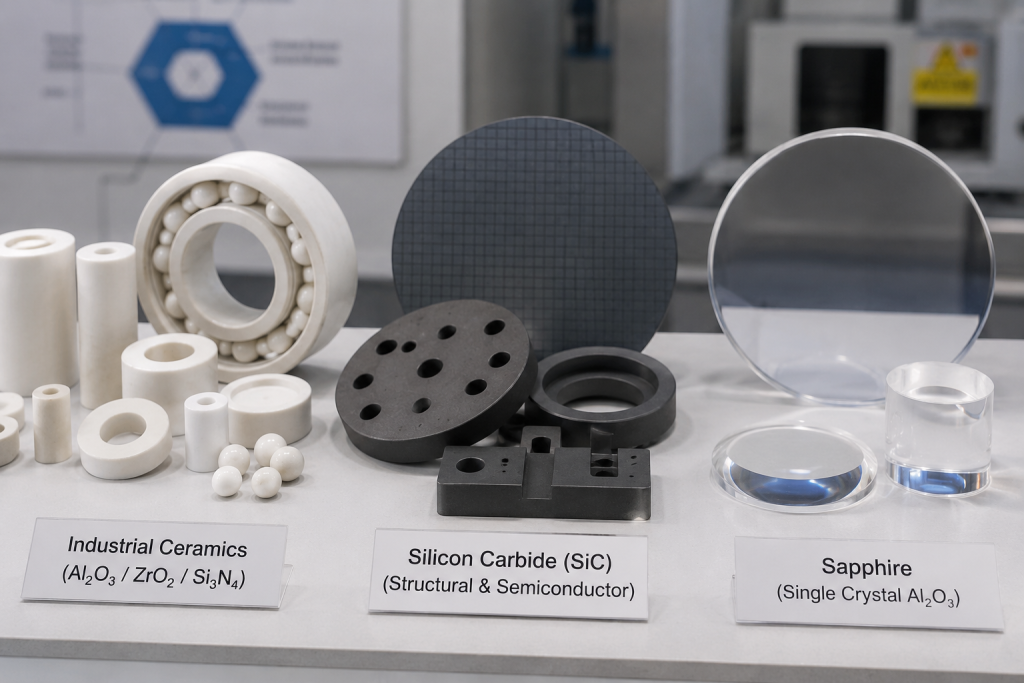
Estos tres materiales representan tres arquitecturas materiales diferentes, no sólo tres niveles de rendimiento.
- Cerámica industrial → sistemas policristalinos de ingeniería
- Carburo de silicio → material funcional de rendimiento extremo
- Zafiro → material monocristalino de calidad óptica
Pertenecen a diferentes “filosofías de diseño de materiales”, no sólo a diferentes familias de materiales.
1. Cerámica industrial: La capa base de la ingeniería
La cerámica industrial se refiere a una amplia clase de materiales policristalinos, entre los que se incluyen:
- Cerámica de alúmina
- Cerámica de circonio
- Cerámica de nitruro de silicio
- Cerámica de SiC sinterizada por reacción
Concepto básico: Materiales de intercambio diseñados
La cerámica industrial no se define por un rendimiento extremo, sino por:
optimización de ingeniería equilibrada entre coste, maquinabilidad y durabilidad
Características típicas:
- Gran resistencia al desgaste
- Buena resistencia a la corrosión
- Aislamiento eléctrico
- Resistencia mecánica de moderada a alta
- Relativamente rentable
Función industrial:
- Rodamientos
- Cierres mecánicos
- Carriles guía
- Boquillas
- Componentes estructurales
2. Carburo de silicio (SiC): El material para entornos extremos
El carburo de silicio se encuentra en la frontera entre la cerámica y los materiales semiconductores funcionales.
Es única porque sirve a dos industrias:
(1) SiC estructural (componentes de ingeniería)
Utilizado en:
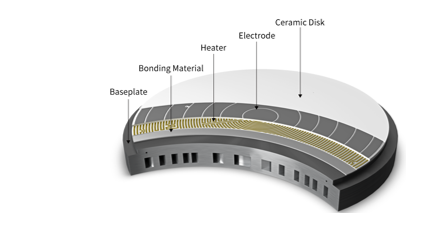
- Mandriles de vacío para semiconductores
- Piezas de la cámara de grabado
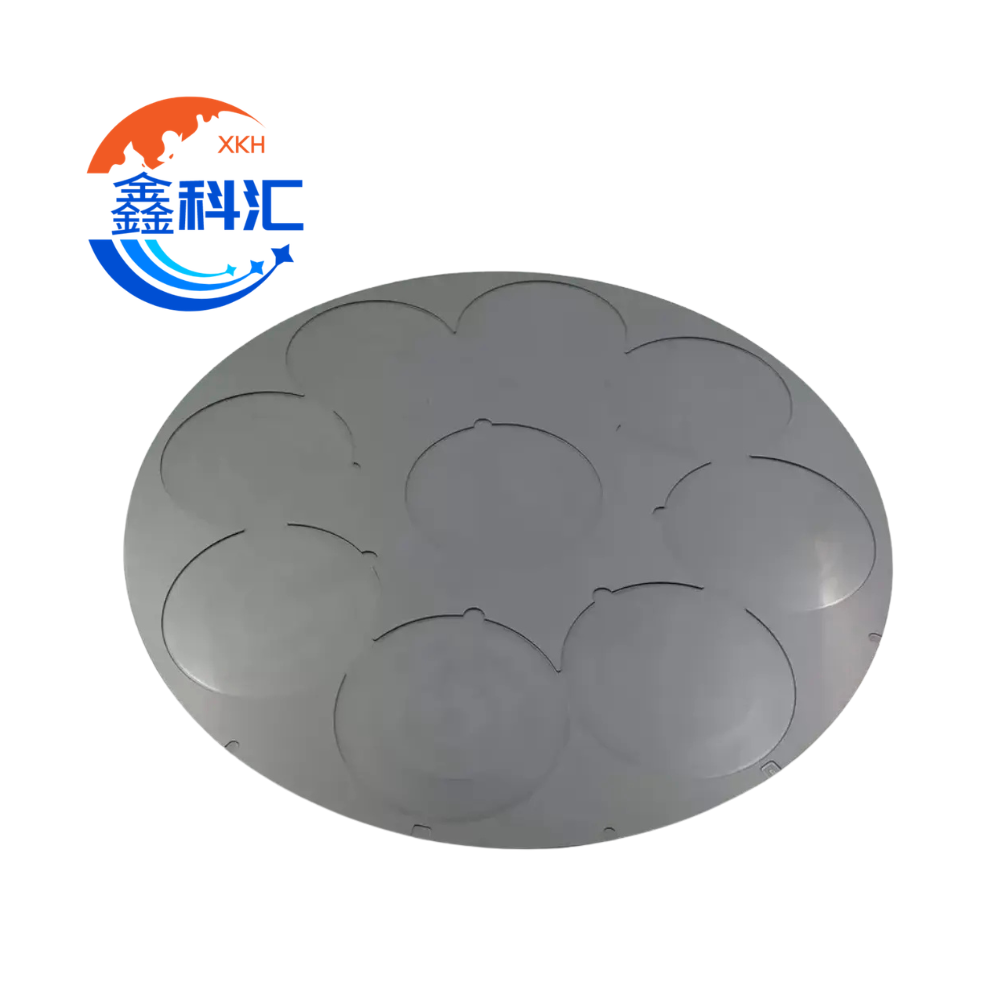
- Soportes para obleas
- Aparatos de alta temperatura
(2) Semiconductor SiC (material de la oblea)
Se utiliza para:
- MOSFET de potencia
- Dispositivos de alta tensión
- Módulos de alimentación para VE
Concepto central: Optimización extrema del rendimiento
SiC está diseñado para:
condiciones extremas térmicas, químicas y eléctricas
Ventajas clave:
- Conductividad térmica extremadamente alta
- Muy baja dilatación térmica
- Excelente resistencia a la corrosión por plasma
- Estabilidad a altas temperaturas (>1000°C)
Limitación:
- Muy difícil y caro de mecanizar
- Sensible a los defectos durante la producción
3. Zafiro: Material óptico funcional monocristalino
El zafiro es fundamentalmente diferente tanto de la cerámica como del SiC.
A diferencia de las cerámicas policristalinas, el zafiro es un monocristal de Al₂O₃..
Concepto básico: Orden estructural + Función óptica
Su valor no es sólo mecánico, sino también óptico:
- Alta transparencia (rango visible a infrarrojo)
- Dureza extremadamente alta (Mohs 9)
- Excelente resistencia al rayado
- Inercia química
Aplicaciones industriales:
- Ventanas ópticas
- Sensores infrarrojos
- Reloj de cristal
- Sustratos LED
- Fundas protectoras
4. Tabla comparativa de parámetros clave
| Propiedad | Cerámica industrial (Al₂O₃ / ZrO₂ / Si₃N₄) | Carburo de silicio (SiC) | Zafiro (Al₂O₃ monocristalino) |
|---|---|---|---|
| Estructura material | Policristalino | Poli / Monocristalino | Cristal único |
| Densidad (g/cm³) | 3.2-6.0 | 3.1-3.2 | 3.98 |
| Dureza (Mohs) | 7-9 | 9-9.5 | 9 |
| Resistencia a la flexión (MPa) | 300-1200 | 300-600 (grado de ingeniería) | 400-700 |
| Conductividad térmica (W/m-K) | 20-30 (Al₂O₃), mayor para Si₃N₄. | 120-270 | 25-35 |
| Temperatura máxima de servicio (°C) | 1200-1600 | 1600-2000 | 1500-1900 |
| Expansión térmica (10-⁶/K) | 6-9 | 2.2-4.0 | 5.0-5.5 |
| Propiedades eléctricas | Aislador | Semiconductor / semiinsulador | Aislador |
| Transparencia óptica | No | No | Excelente |
| Resistencia a la corrosión | Alta | Muy alta | Alta |
| Maquinabilidad | Medio | Difícil | Muy difícil |
| Nivel de costes | Bajo-Medio | Alto-muy alto | Alta |
5. Relación estructural entre los tres materiales
En lugar de competir, forman una jerarquía funcional:
1. Cerámica industrial → Capa base de ingeniería
- Diseñado para la fabricación
- Equilibrio entre costes y resultados
2. Carburo de silicio → Capa para entornos extremos
- Extremos térmicos + químicos + eléctricos
- Aplicaciones para semiconductores
3. Zafiro → Capa de cristal óptico
- Estabilidad monocristalina
- Transmisión óptica + dureza
6. Visión clave: Tres filosofías diferentes de Material Design
| Sistema de materiales | Filosofía de la ingeniería |
|---|---|
| Cerámica industrial | Optimización con restricciones |
| SiC | Rendimiento en condiciones extremas |
| Zafiro | Pureza estructural y funcionalidad óptica |
Esto explica por qué rara vez son intercambiables en los sistemas industriales reales.
7. Lógica de selección práctica (realidad industrial)
En aplicaciones reales de ingeniería:
Elija Cerámica Industrial cuando:
- Se necesitan componentes sensibles a los costes
- Se requiere resistencia mecánica al desgaste
- Formas complejas
Elija SiC cuando:
- Existen entornos de alta temperatura + corrosivos + plasma
- Se trata de equipos semiconductores
- La estabilidad térmica es fundamental
Elija Zafiro cuando:
- Se requiere transparencia óptica
- Se necesita resistencia al rayado + dureza
- Existen aplicaciones para ventanas o cubiertas protectoras
8. Conclusión: No una competición, sino un reparto de papeles
La cerámica industrial, el carburo de silicio y el zafiro no son sustitutos.
Representan:
tres ramas evolutivas de la ingeniería avanzada de materiales
- Cerámica → adaptabilidad de ingeniería
- SiC → límite de rendimiento extremo
- Zafiro → orden óptico cristalino
Juntos, forman un ecosistema de materiales completo para las industrias modernas de alta tecnología.