Precision ceramic balls are widely used in modern high-performance bearings where speed, reliability, and service life are critical. Compared with traditional steel balls, ceramic materials offer distinct advantages in friction reduction, wear resistance, and high-speed operation, making them essential components in aerospace, electric vehicles, precision machinery, and advanced manufacturing equipment.
This article explains the main ceramic materials used in bearing balls, their performance characteristics, and key engineering considerations for selection.
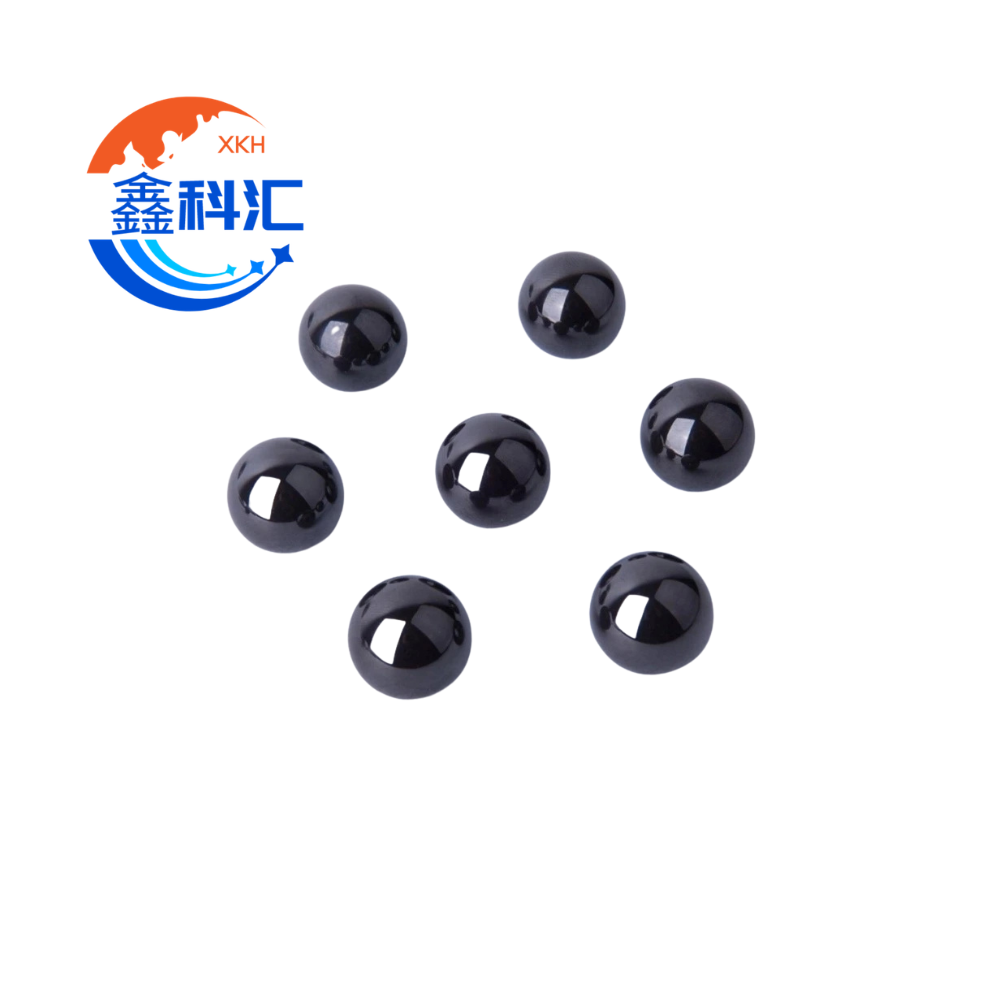
1. What Are Precision Ceramic Bearing Balls?
Precision ceramic bearing balls are spherical rolling elements manufactured from advanced technical ceramics. They replace or complement steel balls inside bearings to improve mechanical and thermal performance.
Los materiales más comunes son:
- Nitruro de silicio (Si₃N₄)
- Circonio (ZrO₂)
- Alúmina (Al₂O₃)
These materials are processed through powder synthesis, high-temperature sintering, and ultra-precision grinding to achieve extremely tight dimensional tolerances and smooth surface finishes.
2. Why Use Ceramic Balls Instead of Steel Balls?
Steel balls have been widely used for decades, but they face limitations in high-speed, high-temperature, or corrosive environments. Ceramic balls offer improvements in several key areas:
- Lower density reduces centrifugal force at high speeds
- Higher hardness improves wear resistance
- Lower friction reduces heat generation
- Excellent corrosion resistance extends service life
- Electrical insulation prevents current-related bearing damage
These advantages make ceramic balls particularly suitable for demanding industrial applications.
3. Main Ceramic Materials Used in Bearing Balls
3.1 Silicon Nitride (Si₃N₄)
Silicon nitride is the most commonly used advanced ceramic for high-performance bearings.
Características principales:
- Low density (about 40% of steel)
- High hardness and strength
- Excellent rolling fatigue resistance
- Strong thermal shock resistance
- Good fracture toughness for a ceramic material
Typical applications:
- High-speed electric motors
- Aerospace components
- CNC machine tool spindles
- Equipos semiconductores
It is especially suitable for hybrid bearings, where ceramic balls are combined with steel rings.
3.2 Circonio (ZrO₂)
Zirconia ceramics are known for their toughness and impact resistance.
Características principales:
- Higher density than silicon nitride
- Excelente resistencia a la fractura
- Good resistance to wear and corrosion
- Relatively lower hardness compared to Si₃N₄
Limitaciones:
- Not ideal for ultra-high-speed applications due to higher weight
Typical applications:
- Pumps and valves
- Chemical processing systems
- Low to medium-speed bearing systems
3.3 Alumina (Al₂O₃)
Alumina is a cost-effective ceramic material with strong chemical stability.
Características principales:
- Gran dureza
- Excelente resistencia a la corrosión
- Good electrical insulation
- Lower toughness compared to other advanced ceramics
Typical applications:
- Low-load bearing systems
- Electrical insulation environments
- Laboratory and precision instruments
4. Performance Comparison of Bearing Ball Materials
| Propiedad | Steel | Nitruro de silicio | Zirconia | Alúmina |
|---|---|---|---|---|
| Densidad | Alta | Bajo | Alta | Medio |
| Dureza | Medio | Muy alta | Alta | Muy alta |
| Resistencia a la corrosión | Bajo | Excelente | Excelente | Excelente |
| High-speed capability | Medio | Excelente | Limitado | Bajo |
| Electrical conductivity | Conductive | Insulating | Insulating | Insulating |
| Friction level | Más alto | Baja | Medio | Medio |
| Coste | Bajo | Alta | Medio | Low–medium |
5. How Ceramic Balls Improve Bearing Performance
5.1 Reduced Friction and Heat
Ceramic materials have smoother surfaces and lower density, which reduces rolling resistance. This results in:
- Lower operating temperature
- Reduced lubricant degradation
- Improved energy efficiency
5.2 Higher Speed Capability
Because ceramic balls are lighter, they generate lower centrifugal forces at high rotational speeds. This allows bearings to operate:
- At higher RPM
- With improved stability
- With reduced deformation risk
This is particularly important in high-speed spindle systems and electric motors.
5.3 Extended Service Life
Ceramic materials have strong wear resistance and hardness, reducing surface damage such as:
- Pitting
- Spalling
- Micro-cracks
This significantly improves bearing durability under proper operating conditions.
5.4 Electrical Insulation Benefits
Silicon nitride and other ceramic materials are electrically non-conductive. This helps prevent:
- Electrical discharge damage in bearings
- Raceway fluting in electric motors
- Current leakage in precision equipment
This is especially important in EV motors and wind turbine systems.
6. Manufacturing and Precision Requirements
The performance of ceramic bearing balls depends heavily on manufacturing quality.
6.1 Powder Processing
High-purity ceramic powders are carefully prepared to ensure uniform grain structure.
6.2 Sintering and Densification
Processes such as hot isostatic pressing are used to eliminate internal porosity and improve mechanical strength.
6.3 Precision Grinding and Polishing
Ultra-precision machining ensures:
- Sphericity within sub-micron levels
- Surface roughness often below Ra 0.01 μm
6.4 Quality Inspection
Typical inspection methods include:
- Roundness measurement
- Surface defect detection
- Hardness testing
- Density and internal flaw analysis
7. Typical Application Areas
Ceramic bearing balls are widely used in industries requiring high reliability and performance:
- Aerospace propulsion systems
- Electric vehicle drive motors
- High-speed machine tool spindles
- Semiconductor wafer processing equipment
- Chemical pumps and corrosive environments
- Precision medical and laboratory instruments
8. Engineering Considerations for Selection
When selecting ceramic balls, engineers typically evaluate:
Condiciones de carga
- Heavy load: silicon nitride preferred
- Moderate load: zirconia may be suitable
Speed requirements
- Ultra-high speed: silicon nitride
- Low speed: alumina or zirconia
Environmental conditions
- Corrosive or wet environments: ceramics preferred over steel
Equilibrio entre costes y resultados
- High-end systems: silicon nitride
- General industrial use: hybrid or zirconia solutions
9. Limitations of Ceramic Bearing Balls
Despite their advantages, ceramic balls also have certain limitations:
- Higher manufacturing cost
- Brittle behavior under extreme shock loads
- More demanding machining and inspection requirements
- Requires proper bearing system design to fully utilize benefits
They are not always a direct one-to-one replacement for steel balls.
10. Future Development Trends
The development of ceramic bearing balls is moving toward:
- Improved toughness through nano-structured ceramics
- Hybrid composite materials
- Ultra-precision surface finishing technologies
- Automated defect detection systems
- Wider adoption in electric mobility and advanced manufacturing
As industrial systems demand higher efficiency and reliability, ceramic bearings will continue to expand into more critical applications.
Conclusión
Precision ceramic bearing balls provide significant performance advantages in high-speed, high-temperature, and corrosive environments. Among available materials, silicon nitride remains the top choice for demanding applications, while zirconia and alumina offer alternatives for specific cost and performance requirements.
Proper material selection and system design are essential to fully unlock their benefits in modern engineering systems.